
General Electric Equipment Company
The General Electric Company, Specialty Division was located in the Electronics Park in Syracuse, NY in 1949. In 1954, the address was 40 Federal Street in West Lynn, MA. One of the big contributions in detector development by GE was the FT54 electrometer tube. It had a 6 volt filament and 100 mA current drain and operated at low voltages. This opened up significant benefits to developing low power portable instruments.
General Electric Logo 1951
The following news article was published in 1944 showing G-E expert using Dr. Taft's "Radium Hound" to assist in locating lost radium source.
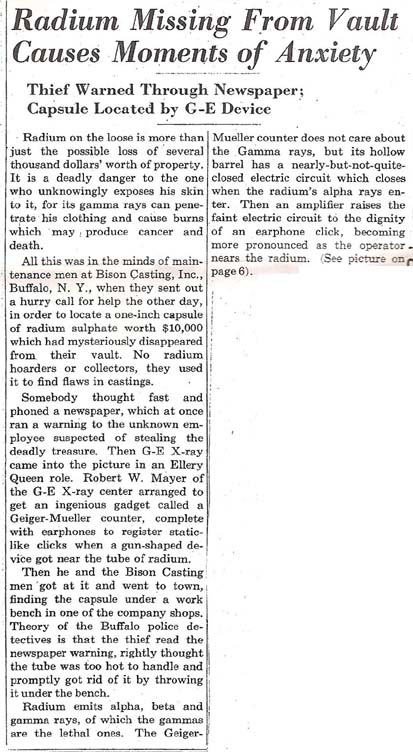
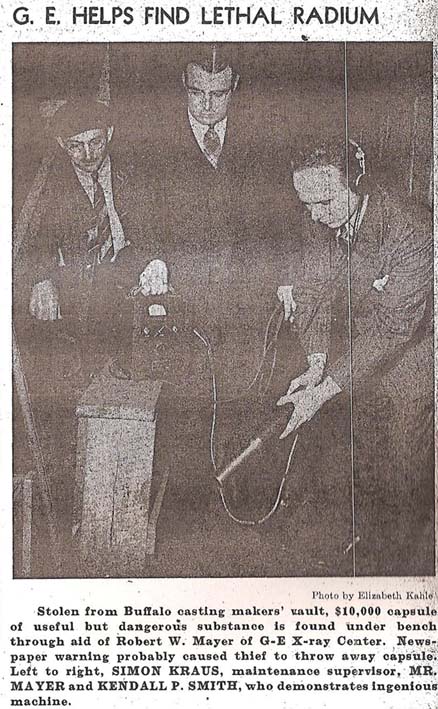
GE Experts Uses Device to Locate Radium in "Radium Missing From Vault Causes Moments Of Anxiety 1944
E. Trout, an x-ray physicist with GE, and George Shulte developed a simple ionization chamber later produced by GE. It was charged by rolling a bubble of mercury down an evacuated tube. There were no batteries and the instructions were mounted on the side. The instructions said to operate, pick up and turn as though you are pouring water out of the red hole. It came in 20 mR and 200 mR full scale. They sold for $39.50.
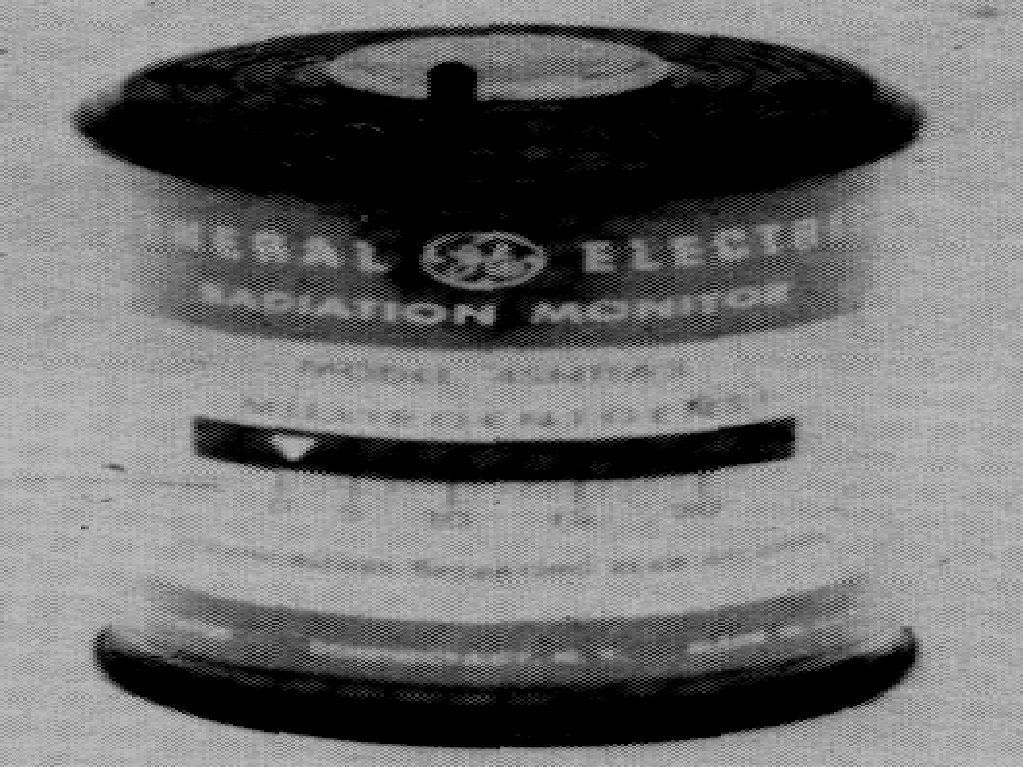
General Electric Integrating Ionization Chamber 1947(?)
GE produced a Zeus-type radiac set for the military in 1948 designated AN/PDR-20. It measured 0.025, 0.25, 2.5 and 500 mR/h. The unit was 9.25” x 6” x 6-7/8” and weighed 10 lbs. It had a bakelite beta shield and an aluminum alpha shield. The ion chamber was 88 cubic inches.
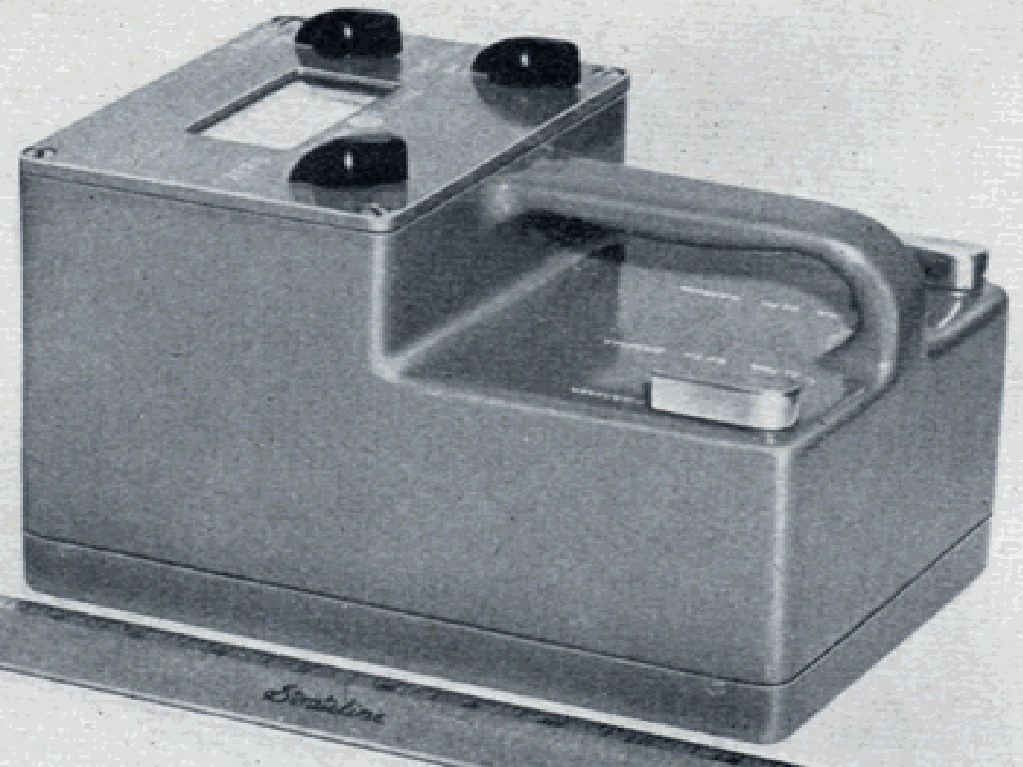
General Electric Zeus Model AN/PDR-20 1948
The Model AN/PDR-10 was produced in 1948 as an improved "Poppy" for alpha measurements. The full scale count was 1000 and 10,000 cpm. The window was pliofile on the bottom of the case. The unit was 12.5” x 4.5” x 2.5” and weighed 5 lbs.
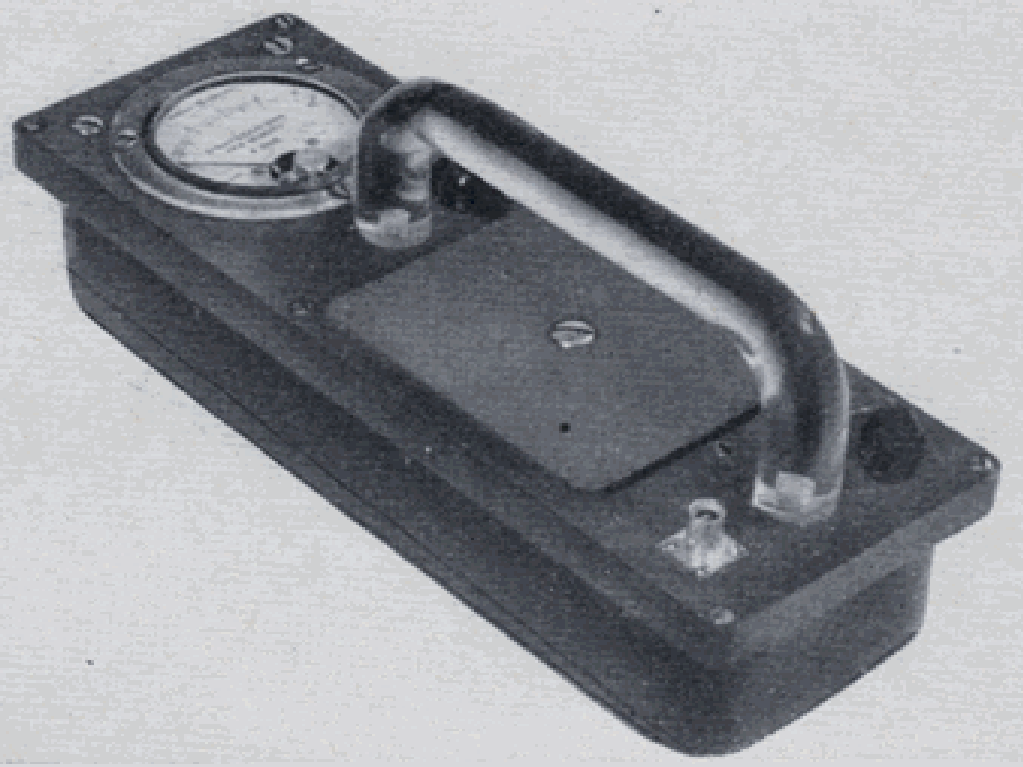
General Electric Model Poppy AN/PDR-10 1948
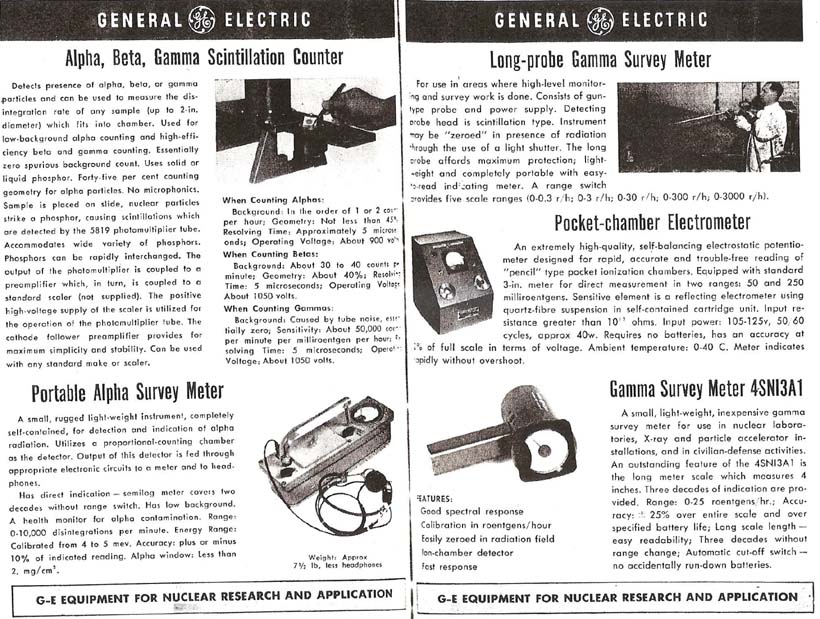
General Electric Ad 1951
The Model AN/PDR-27 was developed in 1948 for the military as a portable GM meter. It had ranges from 0.5, 5, 50 and 500 mR/h. The probe was a halogen-filled mica end window unit for the BS-1 or the BS-2 which was a low sensitivity halogen tube. The probe was 8” x 1-3/8” x 1-3/8” on a 60” flexible cable. The control unit was 9.25” x 5-3/16” x 4.5” and weighed 10.2 lbs. The probe was stored in a tube at the back end of the handle. When the probe was in the handle, the beta end of the probe is exposed for ground measurements.
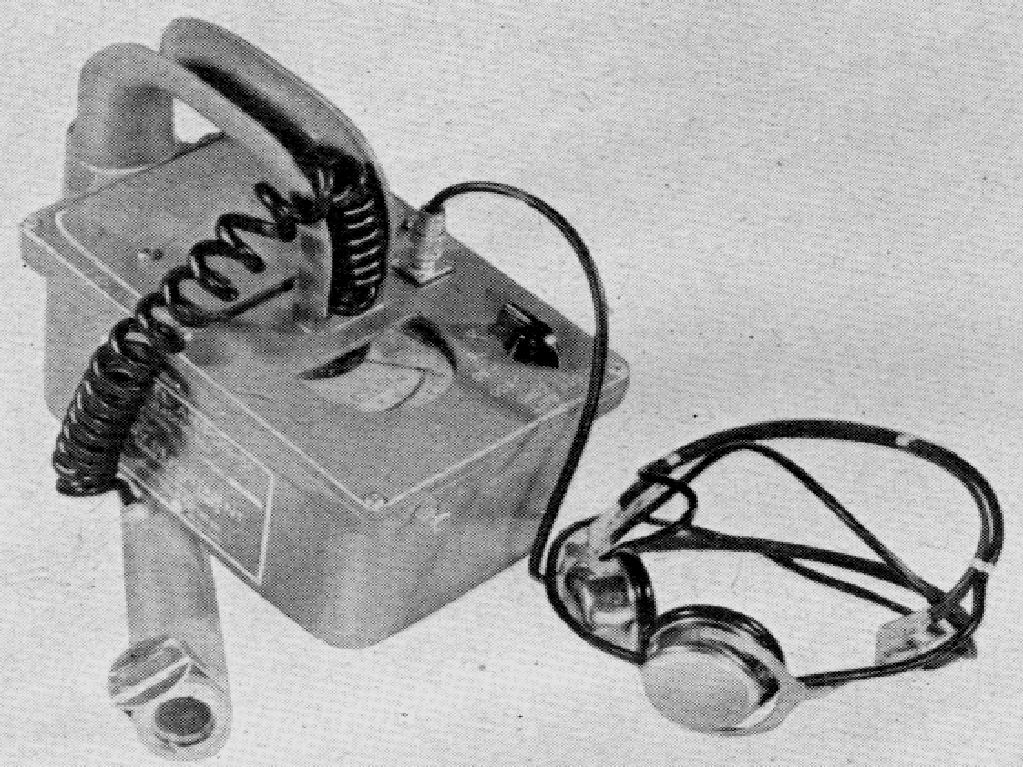
General Electric Model AN/PDR-27 1948
The Model 4SN5A1 alpha survey meter with a proportional counter detector was introduced in 1950. The unit measured 12” long x 4” x 2.5” and weighed less than 5 lbs. It had 100 and 1,000 cpm sensitivity ranges. The high voltage supply consisted of energy storage condensers. There was a switch for charging or lowering voltage. It had a clear plastic handle and headphones.
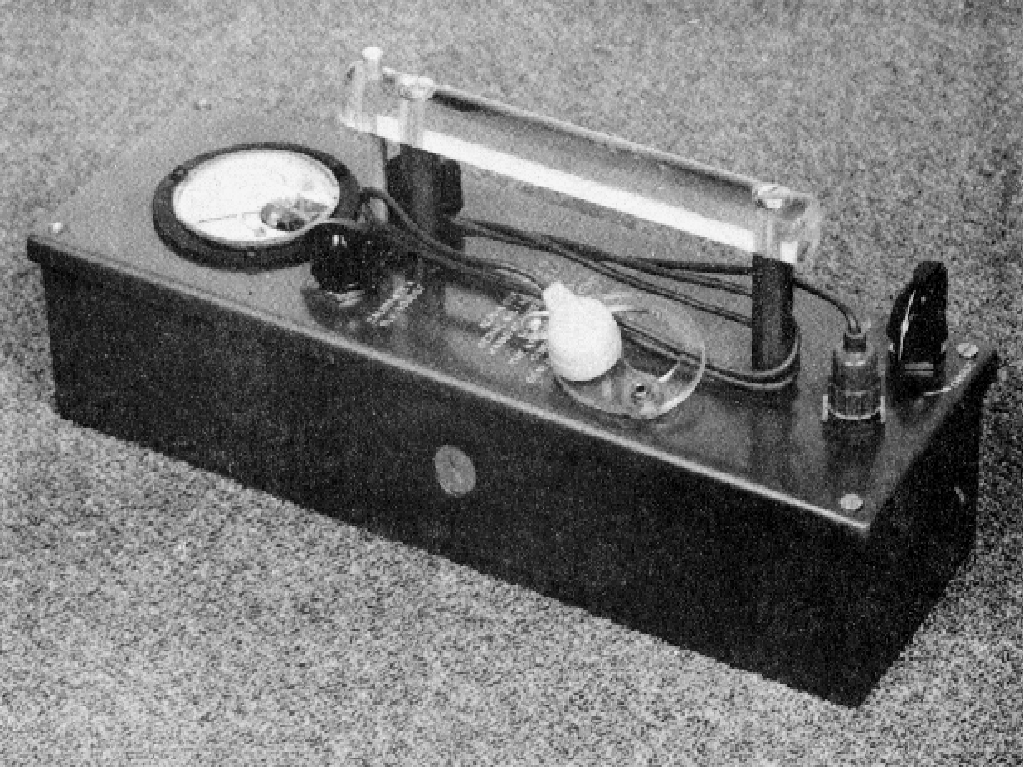
General Electric Alpha Model 4SN5A1 1950
The Model 4SN10A2 was introduced in 1951. It was a portable alpha survey instrument with a proportional counter chamber. This unit was the Air Force standard alpha instrument in 1957 and designated the AN/PDR-10A and AN/PDR-10D. It was a small rugged lightweight instrument for detection and indication of alphas. It uses a proportional counting chamber as the detector. Background is 3 cpm. The probe sensitive area is 105 cm2. It uses high resistance insulation in all high voltage circuits. It has direct indication with a semi-log meter covering two decades with range switch. The range is 0-10,000 dpm and calibrated from 4-5 MeV. The alpha window is located on the bottom. The unit weighs 7.5 lbs. In evaluations in 1957, this unit was found to be unsatisfactory for the Air Force.
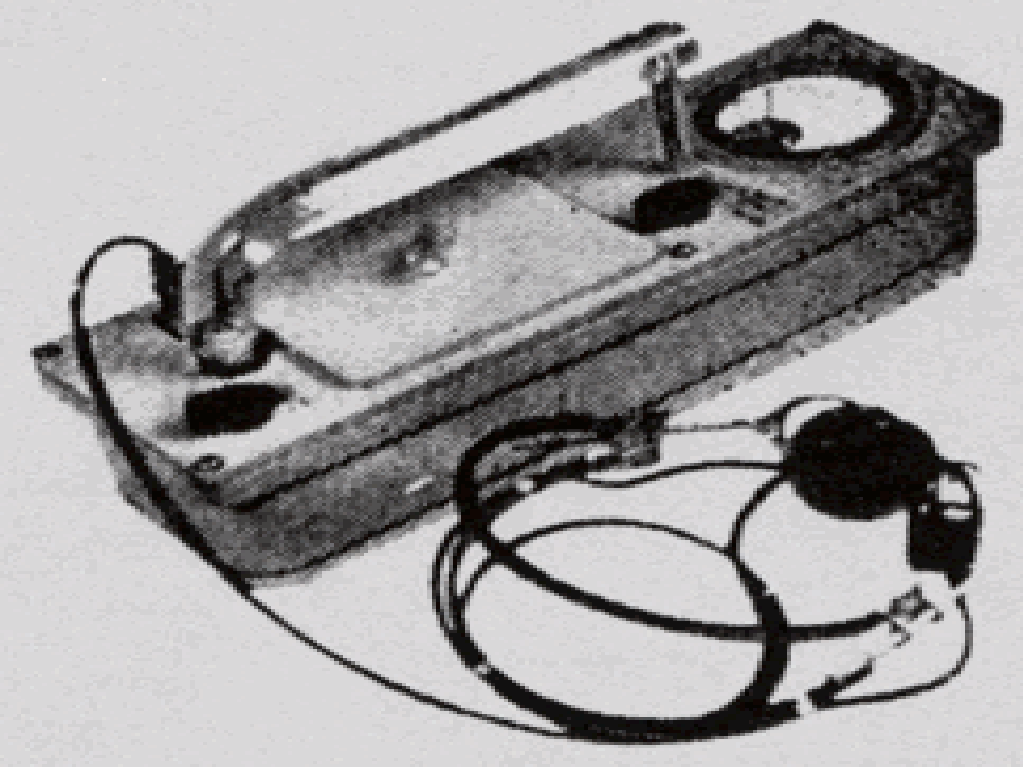
General Electric Alpha Model 4SN10A2 1951
GE offered the Model 4SN8A2 as a beta-gamma survey meter in 1951. It was designed for use in the laboratory or field. It uses two GM halogen-filled tubes and provides high sensitivity over a wide range of radiation levels. A detachable probe contains the sensitive GM tube. The range is 0.5, 5, 50, and 500 mR/h. The range switch changes the meter scale as ranges are switched and selects the GM tube to be used.
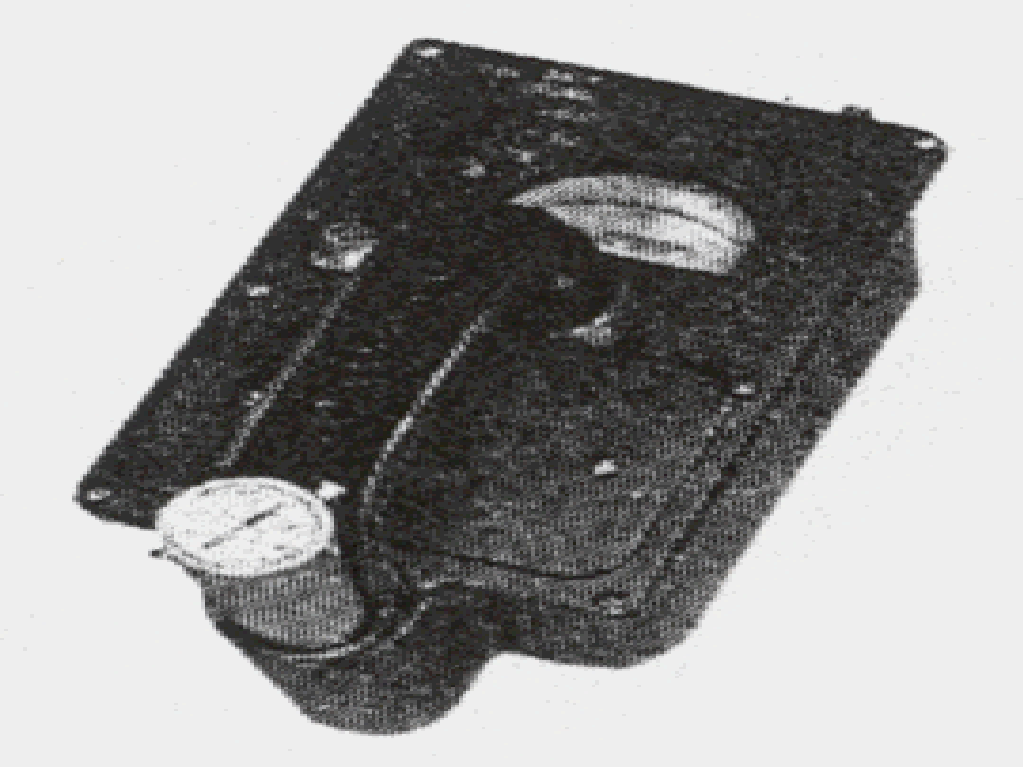
General Electric Model 4SN8A2 1951
The GE Cutie Pie Model 4SNI3A1 was introduced in 1951. A unique feature of the unit is the large 4” meter scale. It has 3 decades or ranges from 0-25 R/h and can measure the three decades without a range change. It has an automatic cutoff so batteries will not accidentally run down.
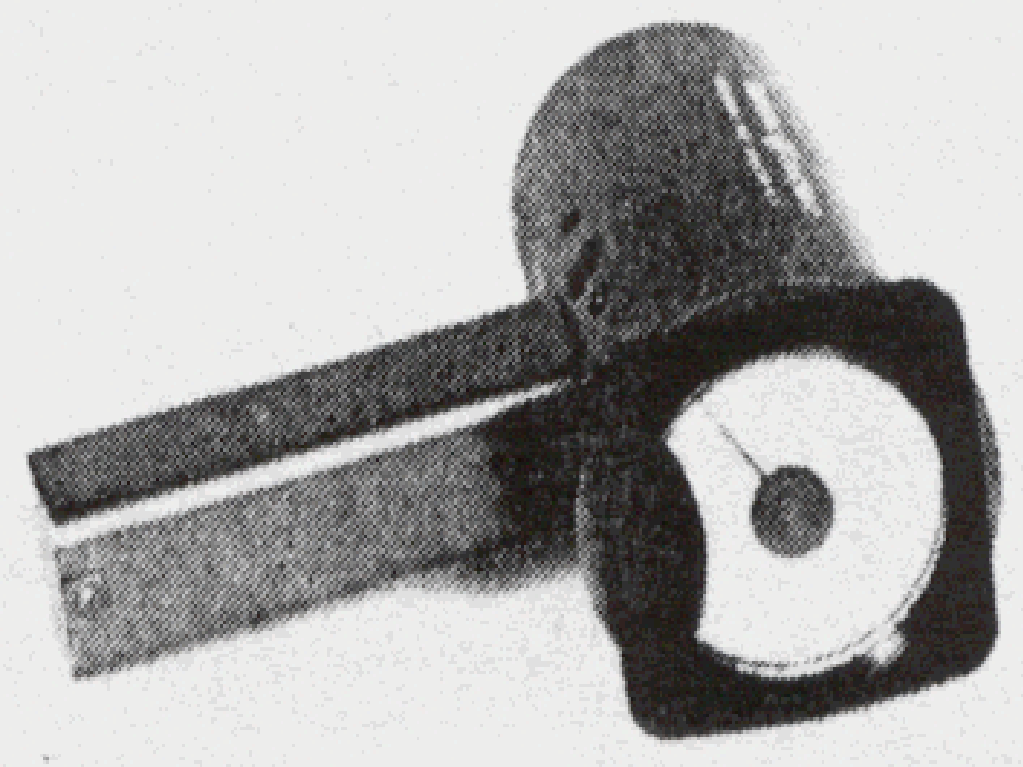
General Electric Cutie Pie 4SNI3A1 1951
GE offered an Explosion-proof Ionization Chamber Model 4SN9A1 in 1951. It uses two halogen-filled Geiger tubes. It was a standard type survey meter packaged in a specially designed cast aluminum pressurized case to make it suitable for Class 1 hazardous atmospheres. A pressure actuated switch breaks all battery circuits when pressure falls below 2 lbs. per square inch. It is pressurized to 15 lbs. It provides alpha, beta and gamma detection with scales from 0.5, 5, 50, and 500 mR/h. It has four ranges X1, X10, X100, and X1000. Maximum sensitivity is 10 mR/h radium gamma. Two slides move over the ionization chamber window and select type of radiation register. It has rubber non-conducting bumpers to prevent electrostatic charge.
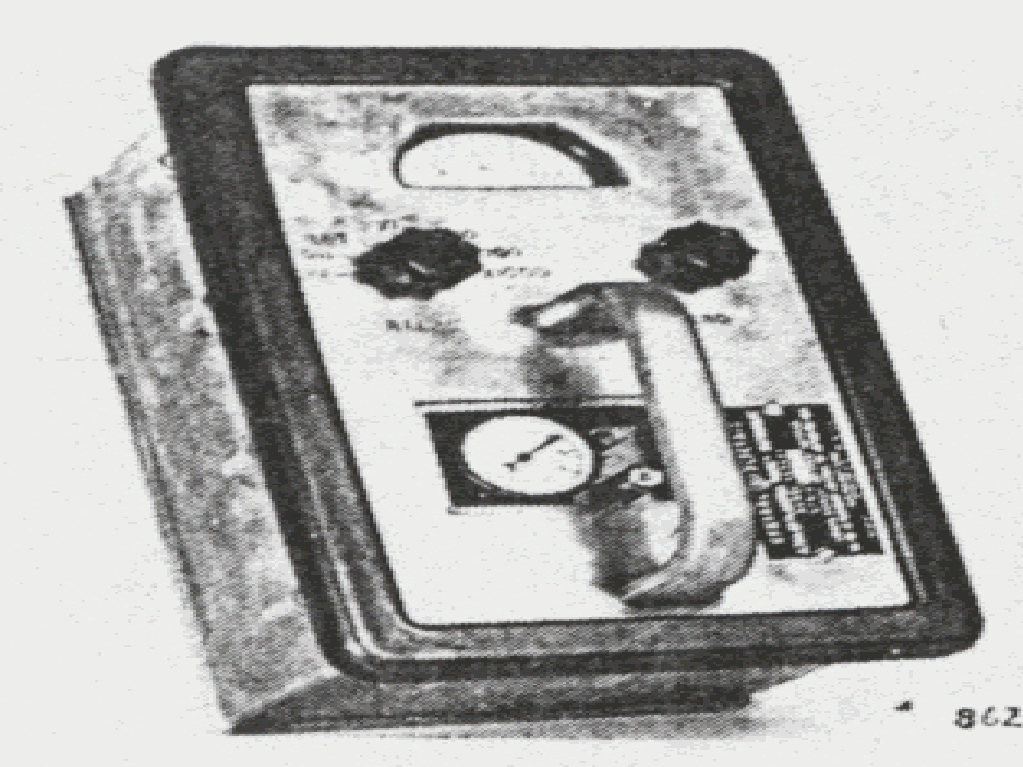
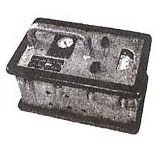
General Electric Model 4SN9A1 1951
The Model 4SN11A2 was introduced in 1951 as a monitor to measure radiation over a given time period. Unit is self-contained with no tubes or batteries and operates as an ionization chamber. It was primarily used for health monitoring. The unit was self-charging by simply turning it upside down and returning it upright. The unit was 4” diameter x 6” high and weighed 14 oz. The scale was from 0-20 mR.
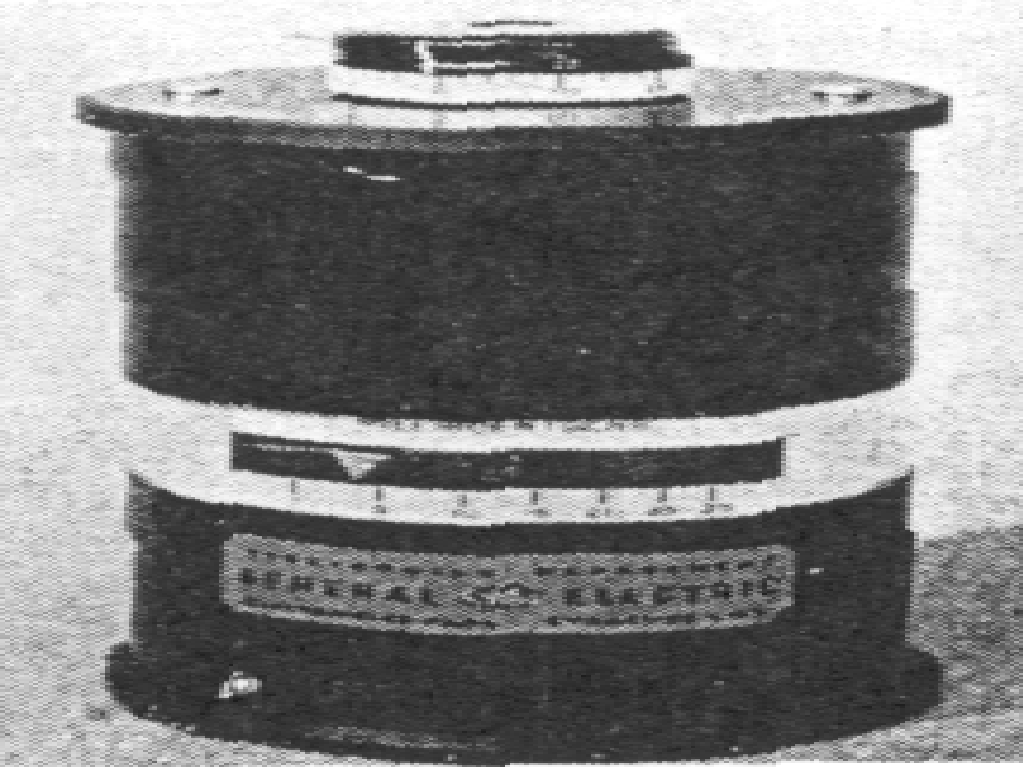
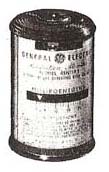
General Electric Model 4SN11A2 1951
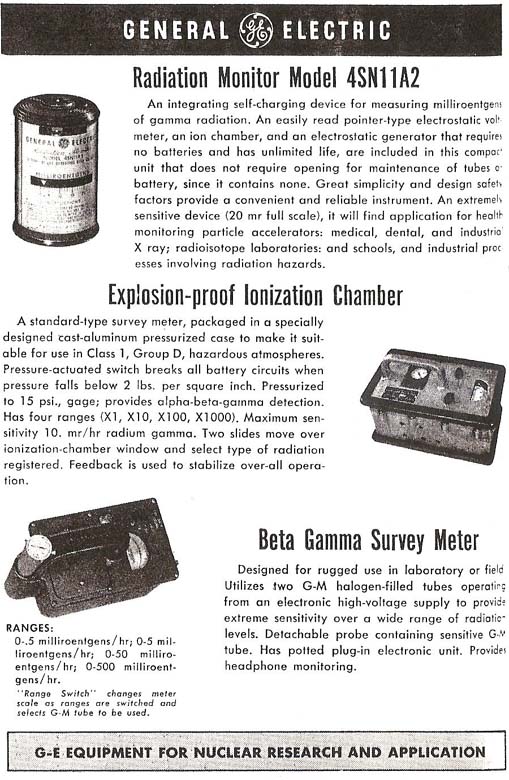
General Electric Ad 1951
The Model 4SN11A3 was introduced in 1954 as an upgrade to the Model 4SN11A2. The unit was housed in a plexi-glass cylinder, sealed to be moisture proof. The range was 20 mR. The unit was 4” diameter x 6” long and weighed 9-3/4 oz. The Model 518B846G2 had a range of 0-60 mR and the Model 518B846G3 had a range of 0-300 mR. The units each sold for $55 in 1956.
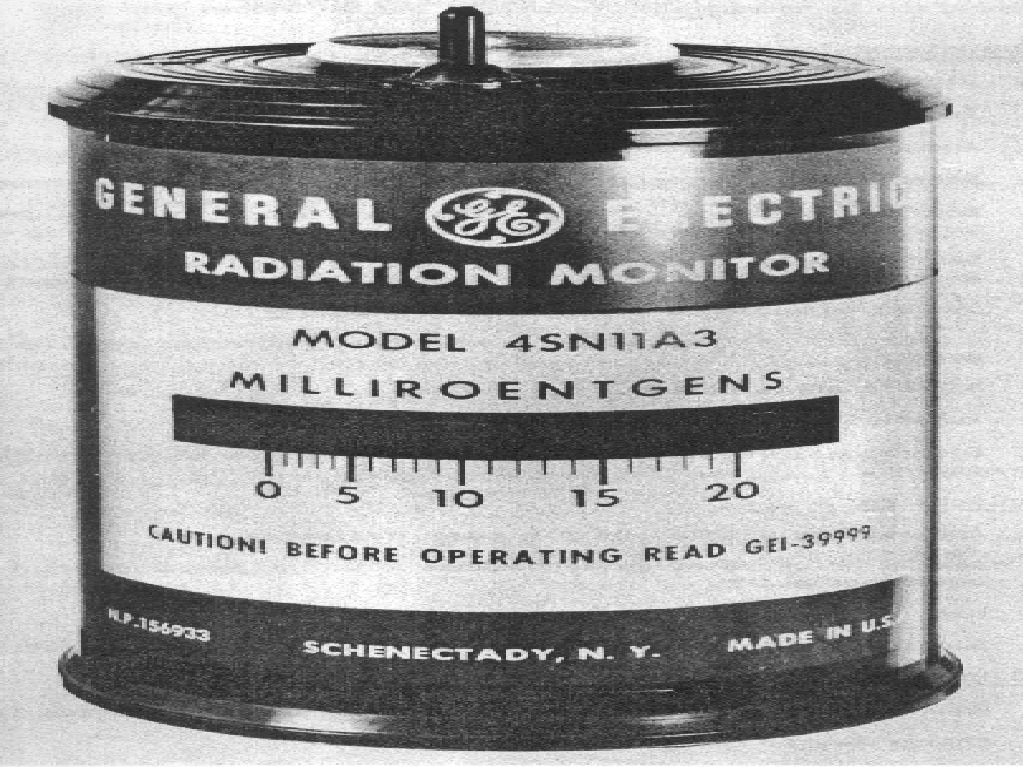
General Electric Model 4SN11A3 1954
GE introduced the long probe cutie pie in 1950 as the Model 5130918 G-1 or G-2. It was designed for monitoring where intense radiation is encountered such as locating beams in particle accelerators. Gamma rays strike a phosphor at the end of either a 4-(G-1) or 6-(G-2) foot probe. The unit has scales from 0.3, 3, 30, 300 and 3,000 R/h. It was calibrated using a 25 mg radium source. The unit can also be used with a new neutron probe that has 5 times the efficiency of normal boron counters. The counter uses enriched boron. The power supply has a shoulder strap for easy carrying. The unit was 5.5” high x 4.5” wide x 8.5” long and weighed 20 lbs.
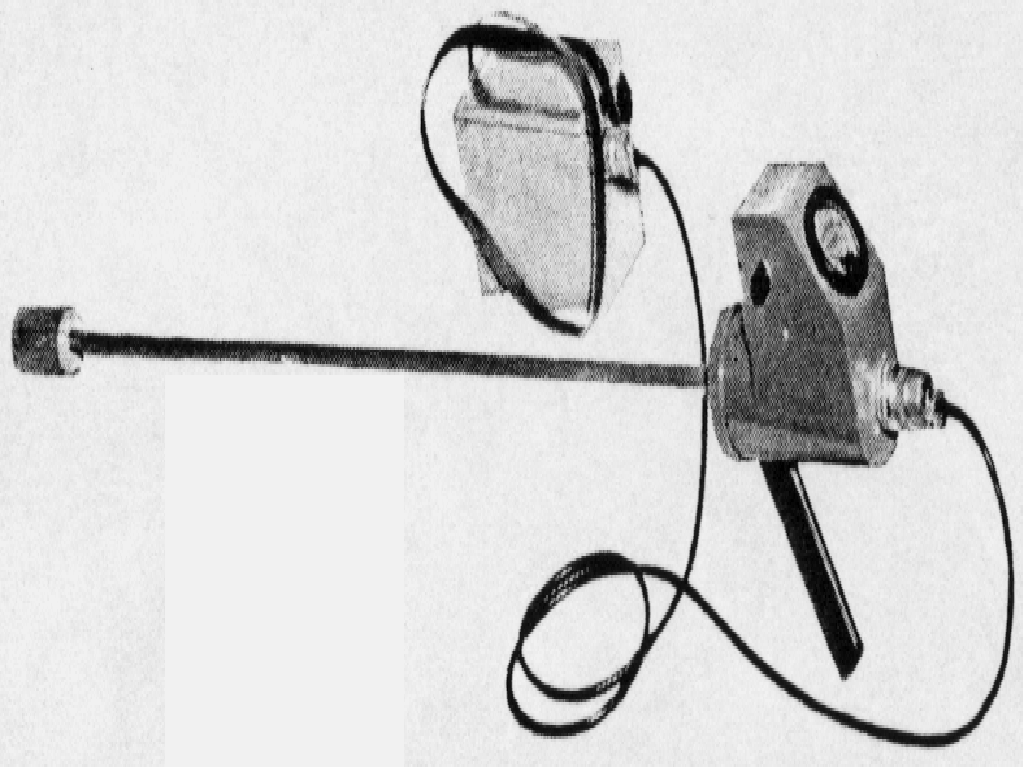
General Electric Long Probe Cutie Pie 1950
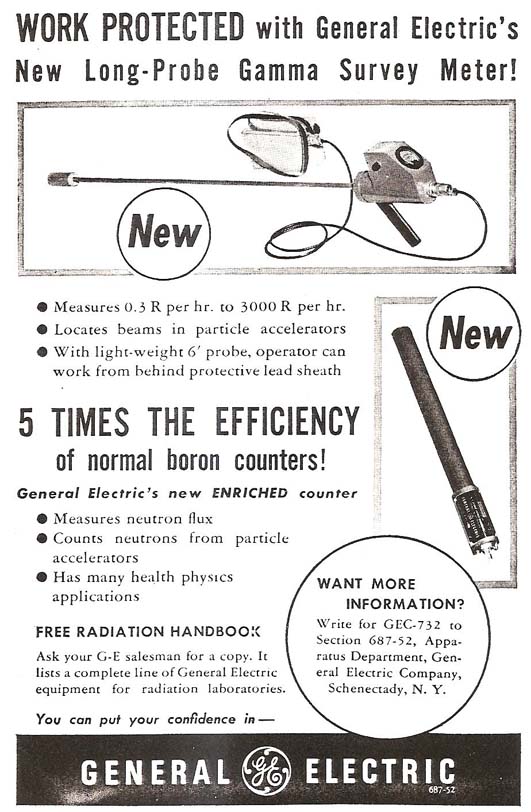
General Electric Ad 1951
The GE Long Probe Scintillation Survey Meter was introduced in 1952. It was a portable instrument for measuring high intensity x-ray and gamma radiation. The detector was a fluorescent material and photomultiplier tube. It had a range of 0.3, 3, 30, 300 and 3,000 R/h. The switch settings were x1, x10, x100, x1000 and x10,000. The unit had a six foot extension probe coupled to a meter indicator in a cutie pie configuration. The batteries were in a external carrying case.
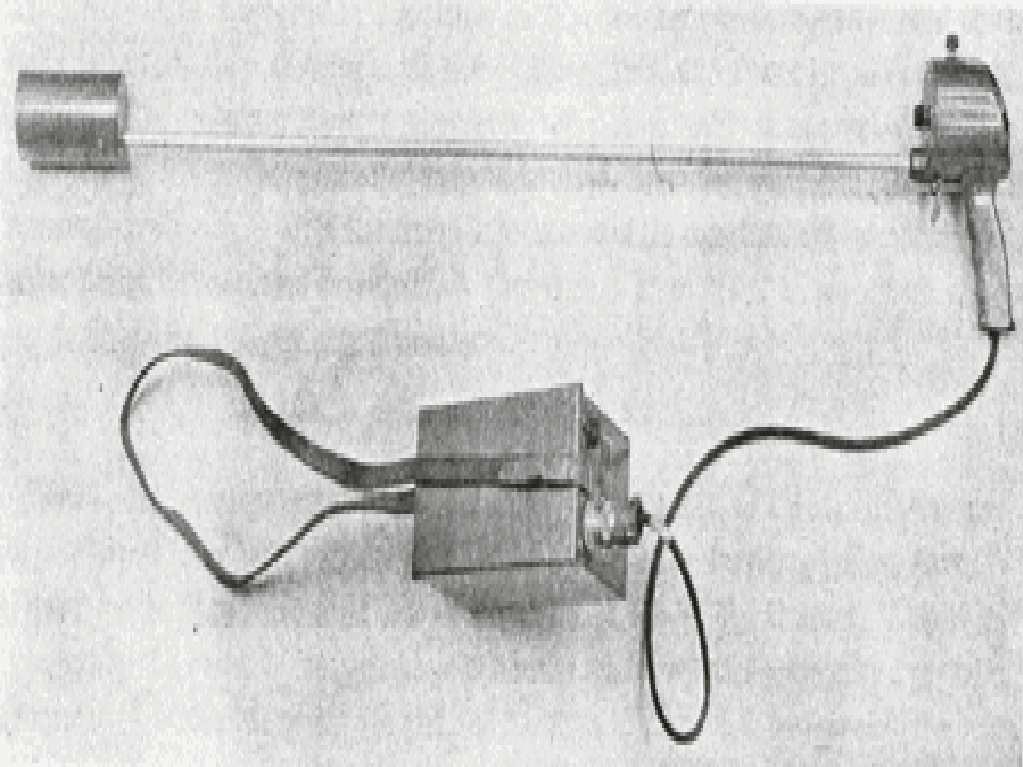
General Electric Long Probe Scintillation Meter 1952

General Electric Model AE100 1955
A portable scintillation alpha survey meter was developed in 1956 by the HAPO Labs at the General Electric Company in Richland, WA. The counter uses a zinc sulfide fluor and a multiplier phototube. The zinc sulfide is coated on a lucite screen and covered with an aluminum dutch leaf and one sheet of double aluminum coated mylar. The foil serves to cover possible pinholes in the mylar ensuring it is light tight. The phototube views the back of the lucite plate and is activated when light photons are emitted from the zinc sulfide. This occurs when alpha particles strike the zinc sulfide. The unit weighs 3.5 lbs.
Need photo
General Electric Zinc Sulfide Alpha Meter 1956
The Alpha Poppy was introduced in 1954. It was designed for contamination monitoring of work areas and clothes. The unit produces “pops” when alpha particles are detected. The muzzle of the pistol like unit is passed close to suspected contaminated areas. It has a thin aluminum window to permit detection of alphas. The alphas strike a zinc suphide screen and produce scintillations which are detected.
Need photo
General Electric Alpha Poppy 1954