National Technical Laboratories
The National Technical Laboratories was located at 814-820 Mission Street in South Pasadena, California and offered the MX series radiation detectors in 1948. The primary contact for the company was Dr. Arnold O. Beckman who later started Arnold O. Beckman, Inc. in 1950, and produced the Model MX-7B Pocket Radiation Alarm and dosimetry equipment. Later in 1950, the National Technical Laboratories became Beckman Instruments.
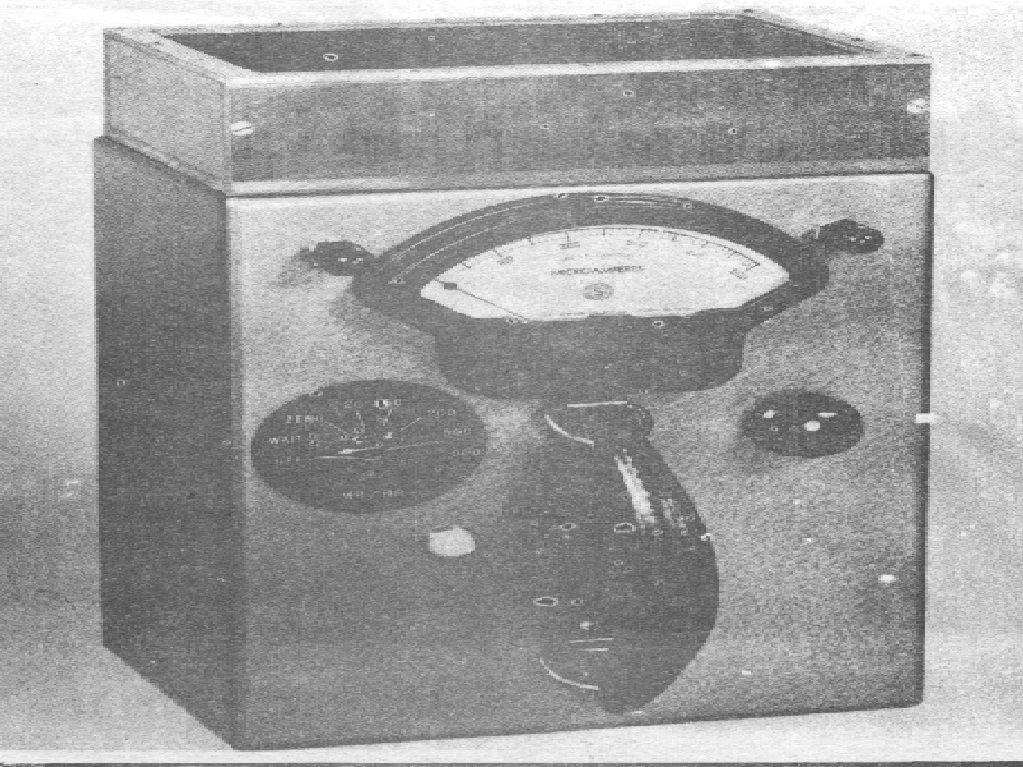
The Model MX-2, commonly referred to as the Beckman Meter, was a portable alpha, beta and gamma air ionization rate meter introduced in 1947. The sensitivity scale was from 20, 50, 200, 500, and 2000 mR/h. The chamber is bakelite coated with graphite with a celluloid window. The chamber volume is 0.82 liters with a 1/8" bakelite beta shield. Ten of the MX-2 and twenty of the MX-6 units were evaluated in Operation Sandstone in 1948. The MX-2 was found to not be useful for field applications due to its weight. The unit was 12.5” x 7.5” x 6.5” and weighed 14.2 lbs. It had a welded aluminum construction with a grey hammertone finish. The unit sold for $300 in 1948.
National Technical Laboratories Model MX-2 1947
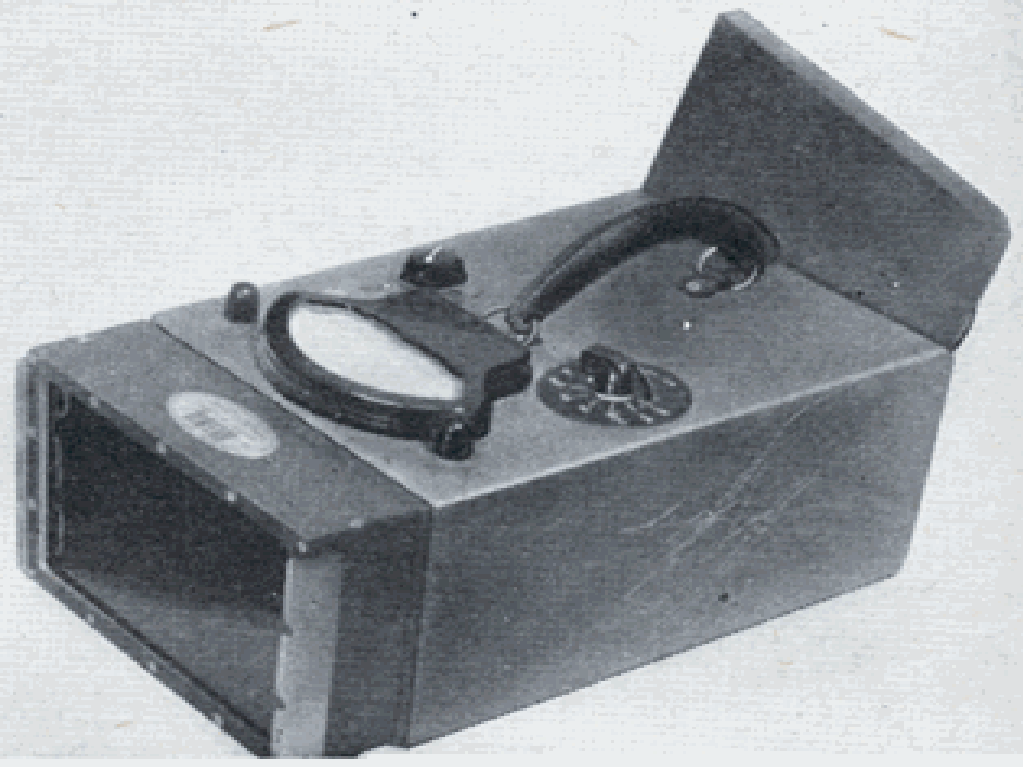
National Technical Laboratories Model MX-2 1948
National Technical Laboratories Model MX-2 1950
In 1948, the “Pocket Screamer” was offered. It would alarm when a preset radiation level was reached.
The Model MX-3 was a monitor for alpha, beta and gamma samples. The Model MX-3A was offered in 1949.
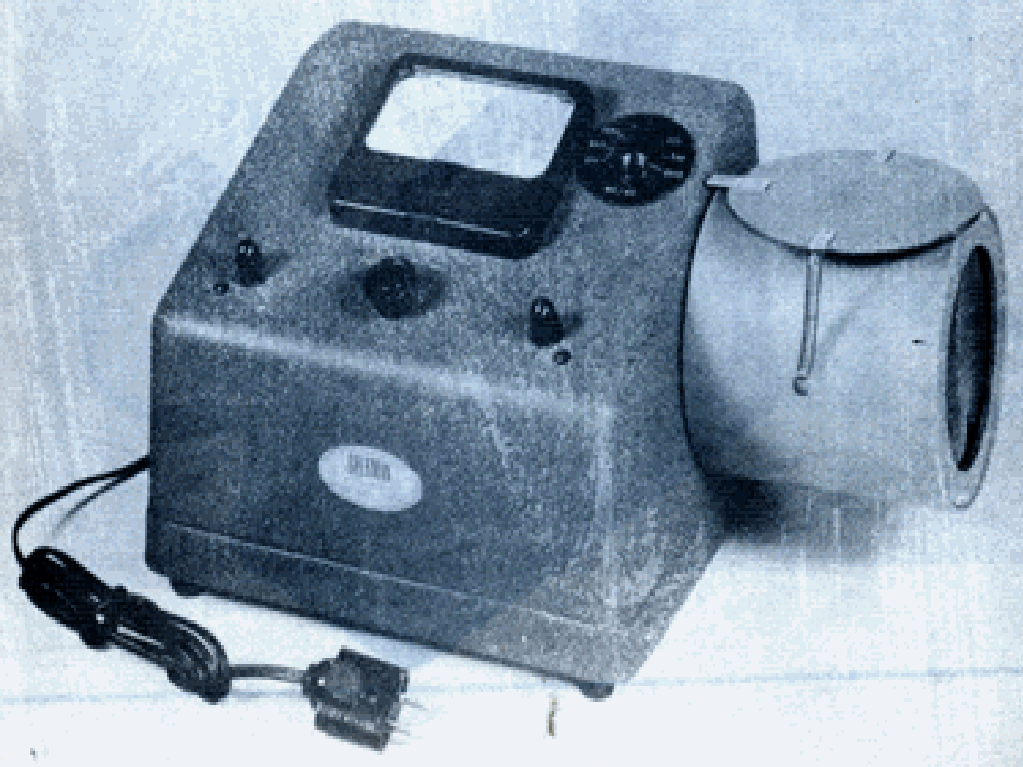
National Technical Laboratories Model MX-3 1949
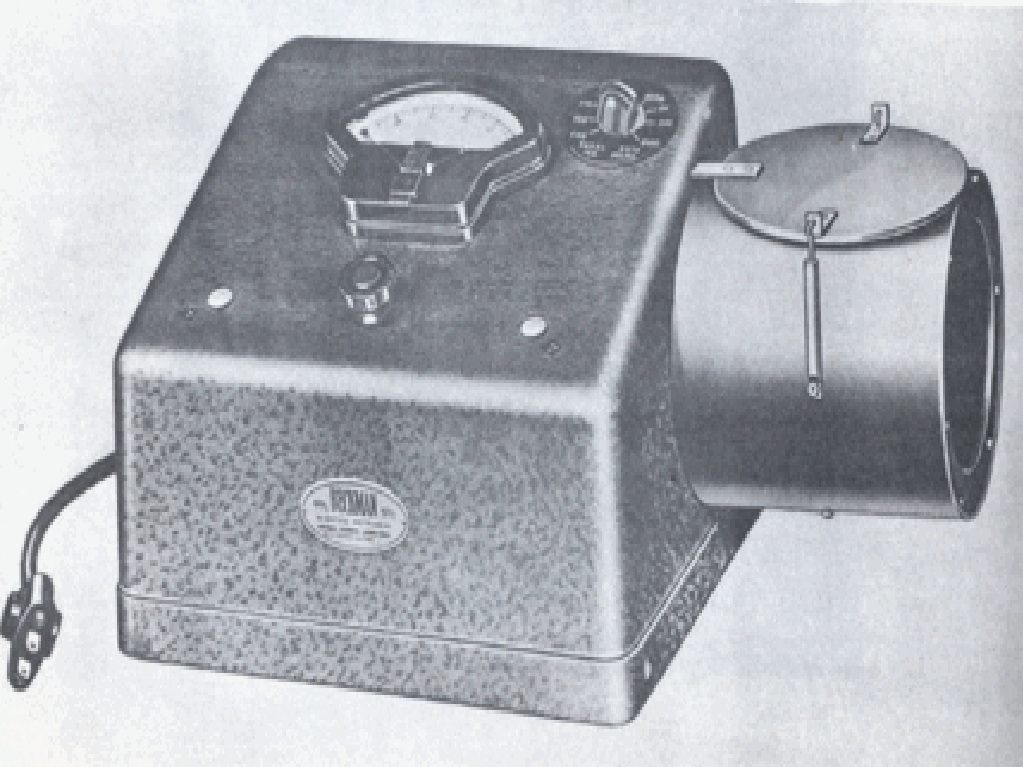
National Technical Labs Model MX-3A 1949
The Model MX-4 was a monitor for beta gamma samples.
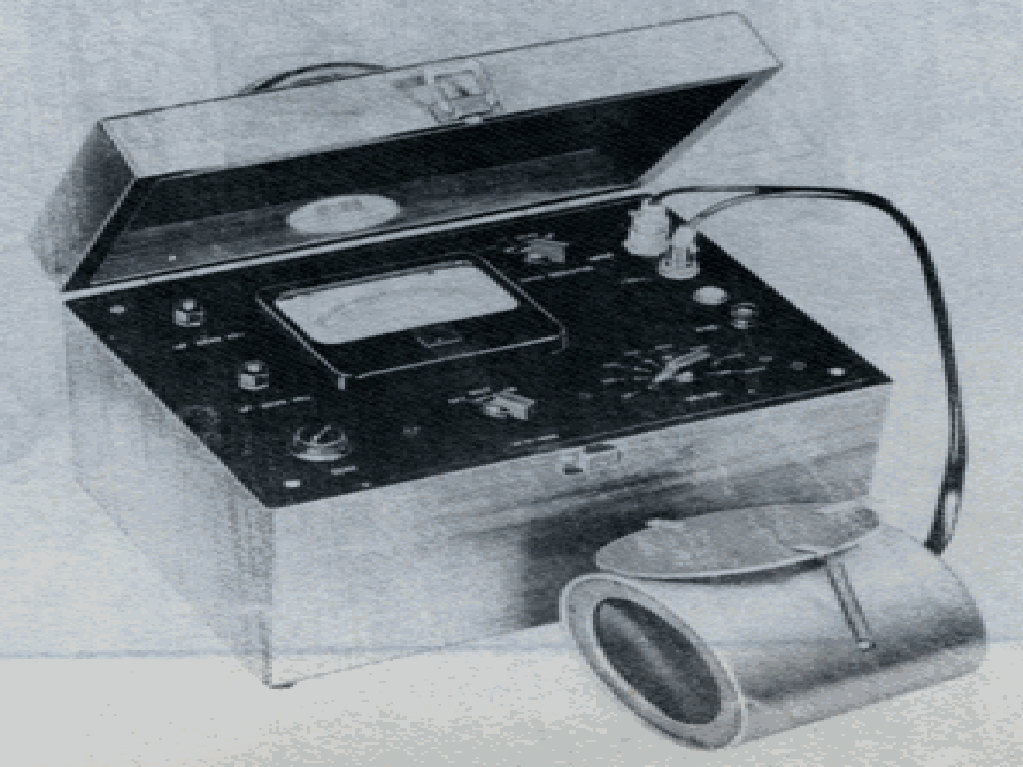
National Technical Laboratories Model MX-4 1948
The Model MX-5 (IM-39/PD) was a portable beta-gamma count rate survey meter with a thin-wall glass GM tube in an external probe available in 1948. It was 9.25” x 4-5/8” x 5-1/4” and weighed 9 lbs. The probe was 8” x 1” with a 30” cable. It had full scale sensitivity for beta from 1000, 10000 and 100,000 cpm and gamma from 0.2, 2 and 20 mR/h. The beta shield is 1/32” brass. It could detect betas down to 205 keV. It has a smooth gray hammertone finish case with metal parts plated in chrome to resist salt water corrosion and had a hinged smooth plastic handle.
Twenty of the Model MX-5 units were evaluated in Operations Sandstone in 1948. The unit was found to be difficult to use with gloves and the non-rigid handle was not effective. The units sold for $200 in 1948.
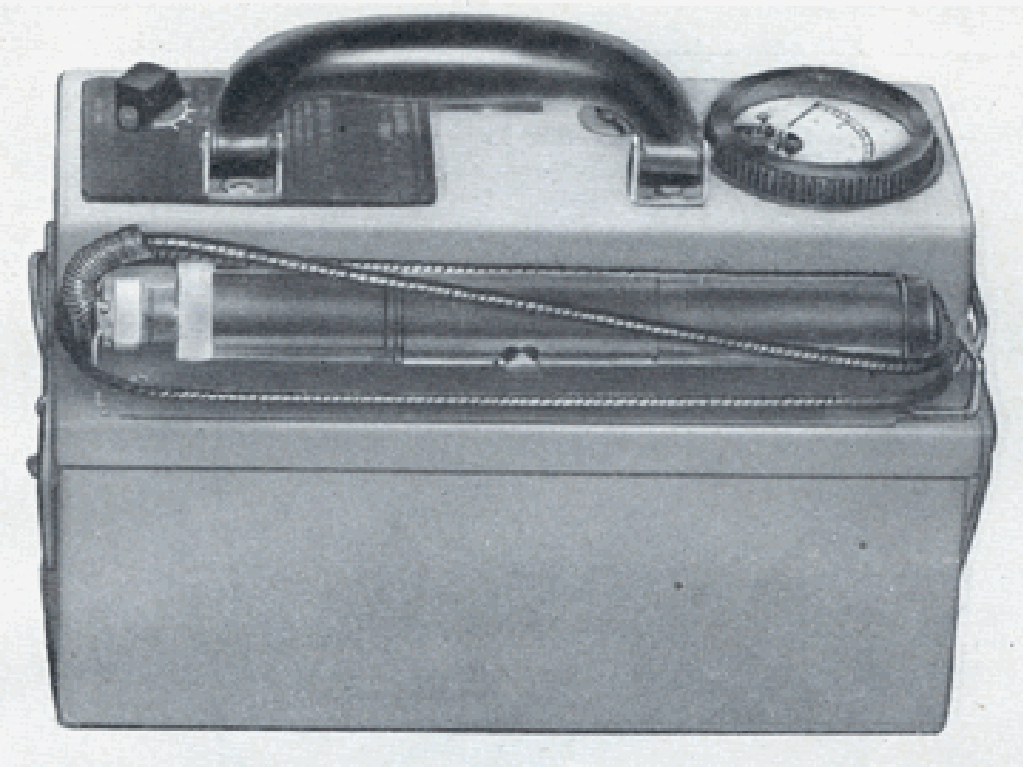
National Technical Laboratories Model MX-5 1948
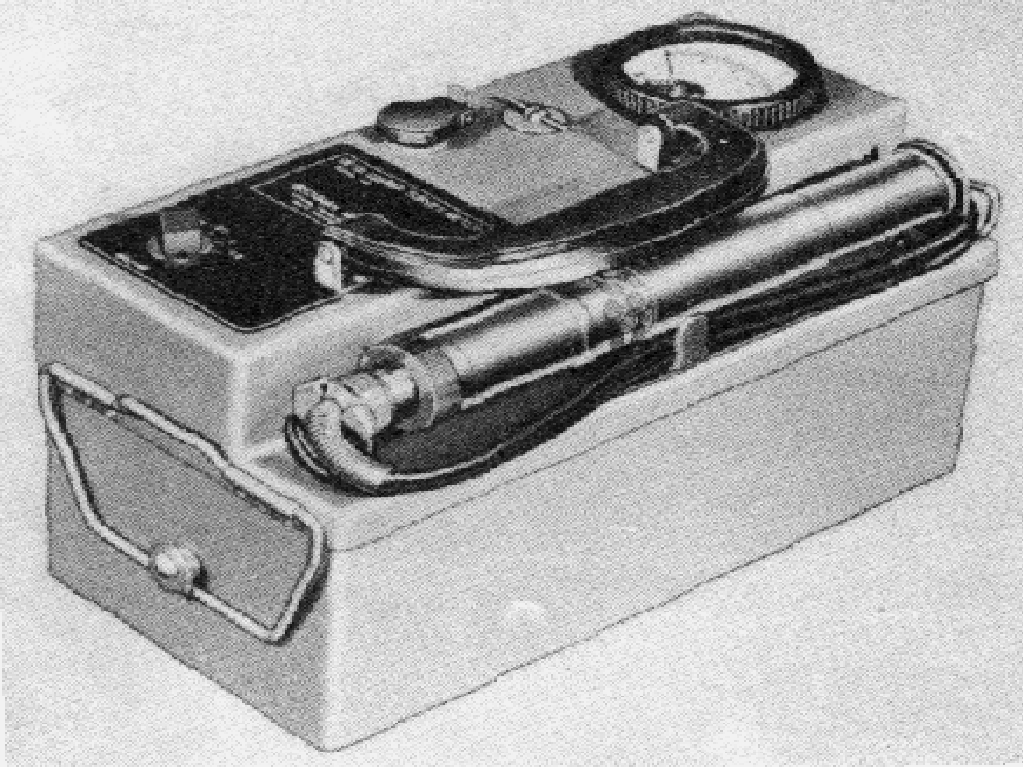
National Technical Laboratories Model MX-5 1948
The Model MC-6 was introduced in 1948 as an ionization chamber survey meter. It had a range of 2500 mR/h. It was used in Operation Sandstone.
The Model MX-6 (IM-40/PD) was a portable gamma ionization rate meter with a built-in, sealed ionization chamber in 1947. It weighs 8 lbs. It had ranges from 5, 50, 500 and 5,000 mR/h. The chamber is made of copper, lined with aquadag with a 0.5 liter volume. It is filled with freon #22 at 4 lbs. The case is welded aluminum with a hammertone finish. It used four 1.5, one 3, and six 22.5 volt batteries. The unit was 9.5” x 4-7/8” x 6” and weighed 8 lbs.
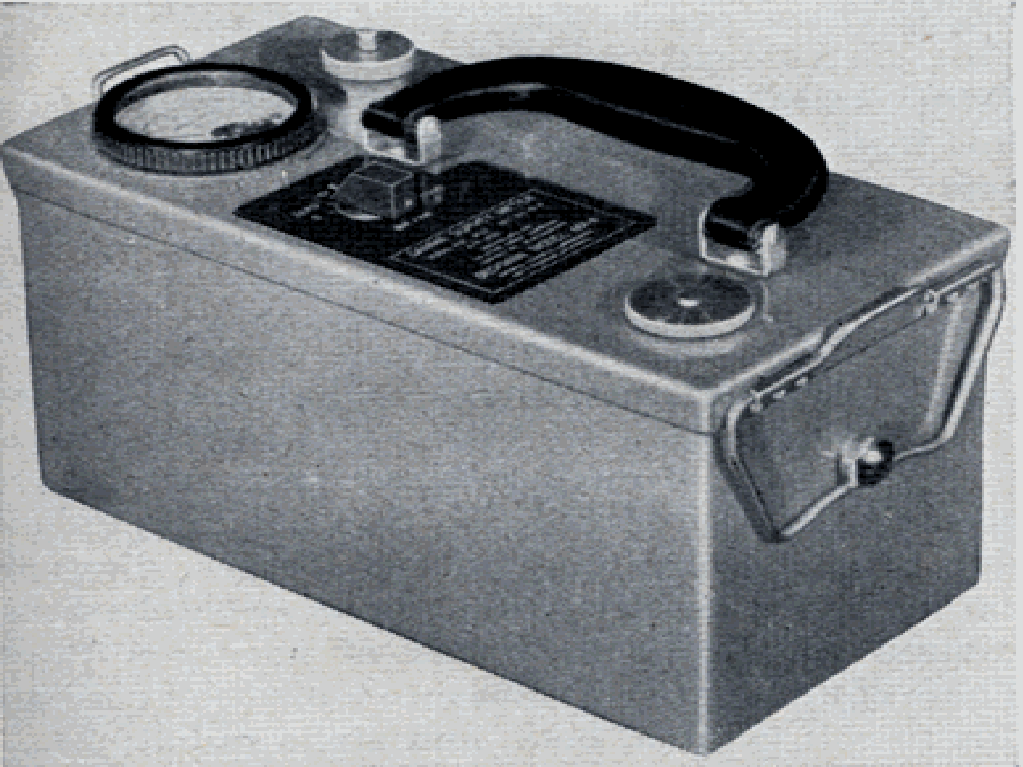
National Technical Laboratories Model MX-6 1947
National Technical Laboratories Model MX-6 1947
The Model MX-7 was introduced as a pocket integrating ionization chamber dosimeter with a preset audible buzzer. It had a range of 200 mR. It was evaluated in 1948 as part of Operation Sandstone. It was determined that the alarm was hard to hear in field conditions and failed to trip under field conditions. It sold for $35 in 1948. The Model MX-7B was introduced in 1949. It was a gamma personnel monitor with an ionization chamber and audible alarm. It was 2” x 3.25” x 5.25” and weighed 1 lb. The alarm sounded after accumulating 100 mR. It used one 1.34 and one 30 volt batteries. A test button was available to check unit operation. It was later sold in 1950 by Arnold O. Beckman, Inc.
Need photo
National Technical Laboratories Model MX-7 1948
The Model MX-8 was offered in 1949 as a lightweight, portable detector for prospecting for radioactive ores. The unit is 7.75” x 4” x 2.75” and weighed 3.25 lbs. It could detect beta and gamma with an internal Geiger counter tube. It used one 300, one 22.5 and one 1.5 volt batteries. The condensers to power the Geiger tube were charged using a push button switch. It had headphones for audio detection.
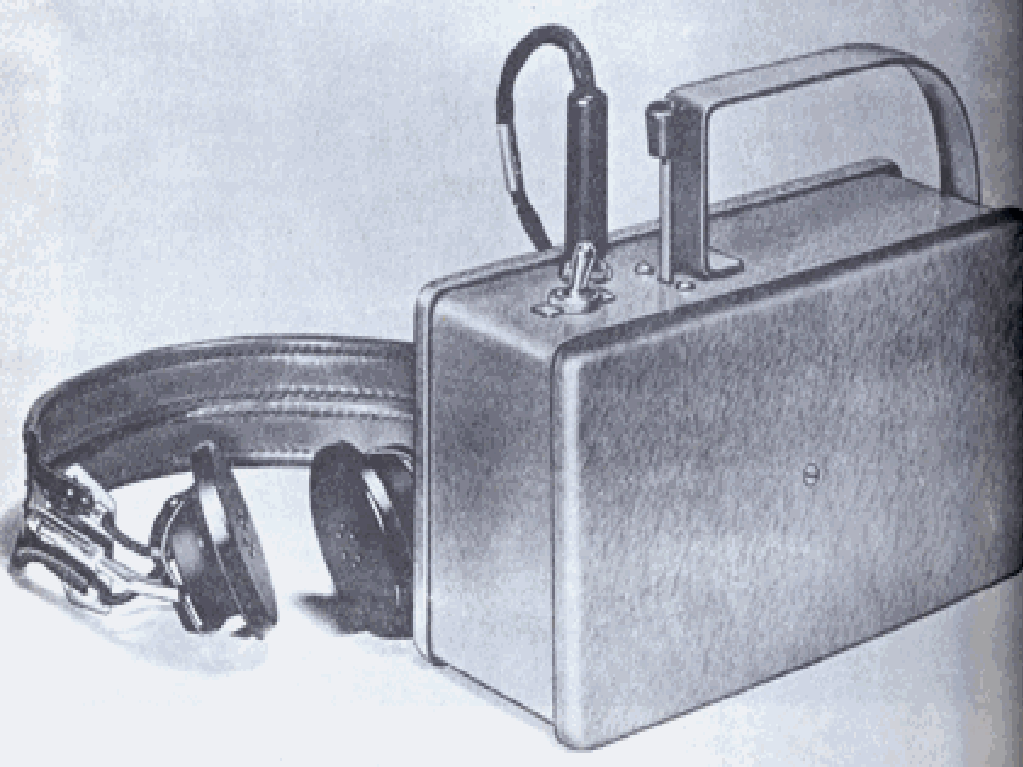
National Technical Laboratories Model MX-8 1949