Los Alamos National Laboratory
Los Alamos National Laboratory (formerly known as the Los Alamos Scientific Laboratory) produced a number of experimental detectors under the work of Richard C. Watts in 1944. One of the first instruments used at Los Alamos was the Pluto alpha survey meter.
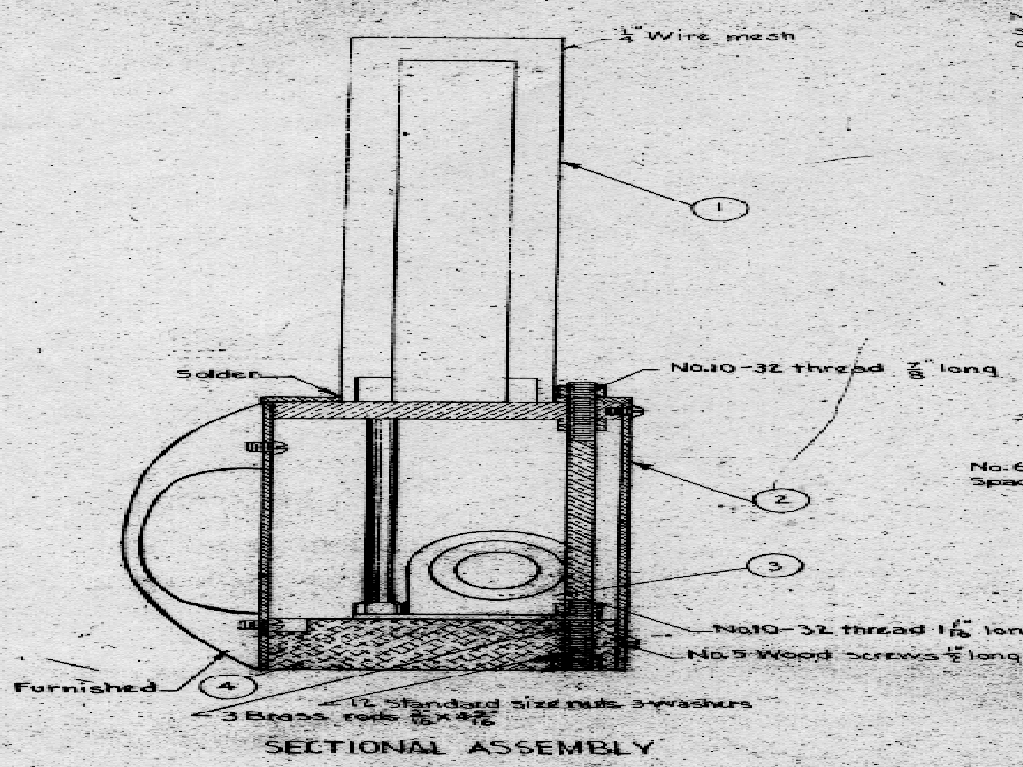
A hand contamination meter for alpha, beta and gamma was developed in 1944 by R. J. Watts. It had a thin window counter and a Geiger-Mueller tube. The probe was on a 6 foot cable and had a screen over the thin beta screen for protection. The probe handle has a lead base so it will stay at a location if longer measurements are required.
Watts Hand Contamination Meter 1944
In 1945, there was only one instrument to measure alpha contamination – the Pluto developed at the University of Chicago. The Los Alamos National Laboratory under the direction of Richard J. Watts developed an Alpha Contamination Snooper “Super Suds”. It has a chamber with free flow methane gas. Since there would be no repair facilities, a simple alpha counter was designed and 12 assembled in two weeks as a stopgap measure. A total of 24 units were eventually assembled.
As the Manhattan project progressed, it became evident that the trend was to measure radiation of higher intensities. This included the water boiler, the criticality measurements at Omega, the Ra-La experiments and the Trinity Shot. The Victoreen Model 427 was designed to measure up to 10 R/h. At Los Alamos, the Roentgenometer Super Suds was developed in 1945 to meet this need.
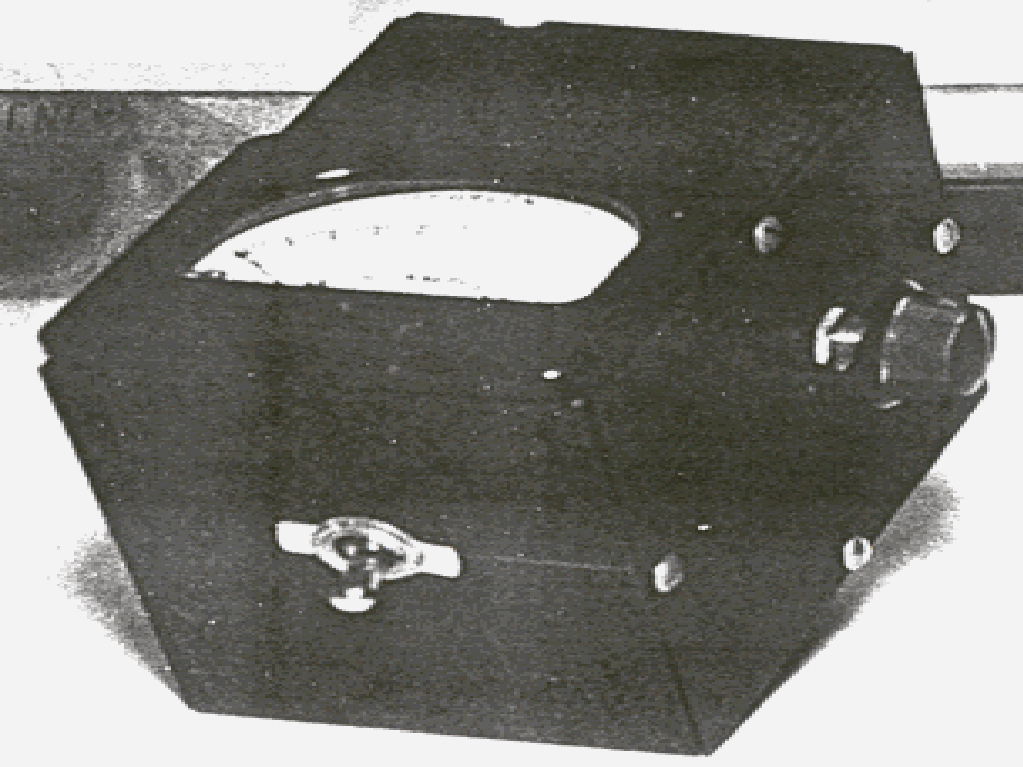
Los Alamos Roentgenometer Super Suds 1945
The unit was developed for use at a Pacific Island with 90% humidity. To overcome humidity effects, he dipped the whole instrument in ceresin wax. It had a sensitivity of 10000 cpm. The Pluto meter only measured down to 10,000 cpm alpha and Watts wanted to measure down to 200 cpm alpha, a limit to which bench surfaces could be decontaminated. He used a free flow methane chamber with a thin collodin window. The bottom of the meter had a screen mesh over the thin window to allow alpha measurements. The Watts Survey Meter was developed in 1945. It had three ranges and a scale from 0-50.
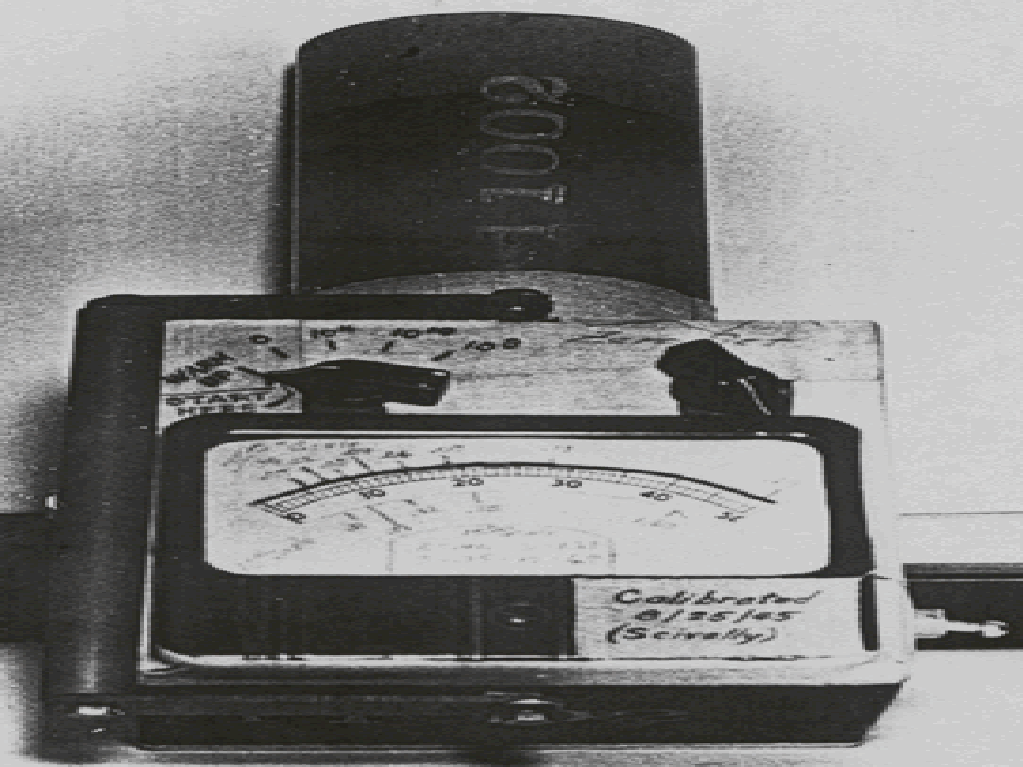
Watts Ionization Chamber Survey Meter 1945
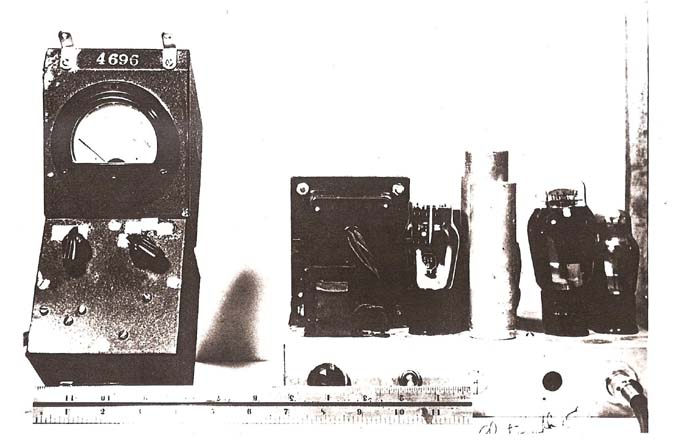
Watts Contamination Meter and Power Supply Alpha Meter 1944
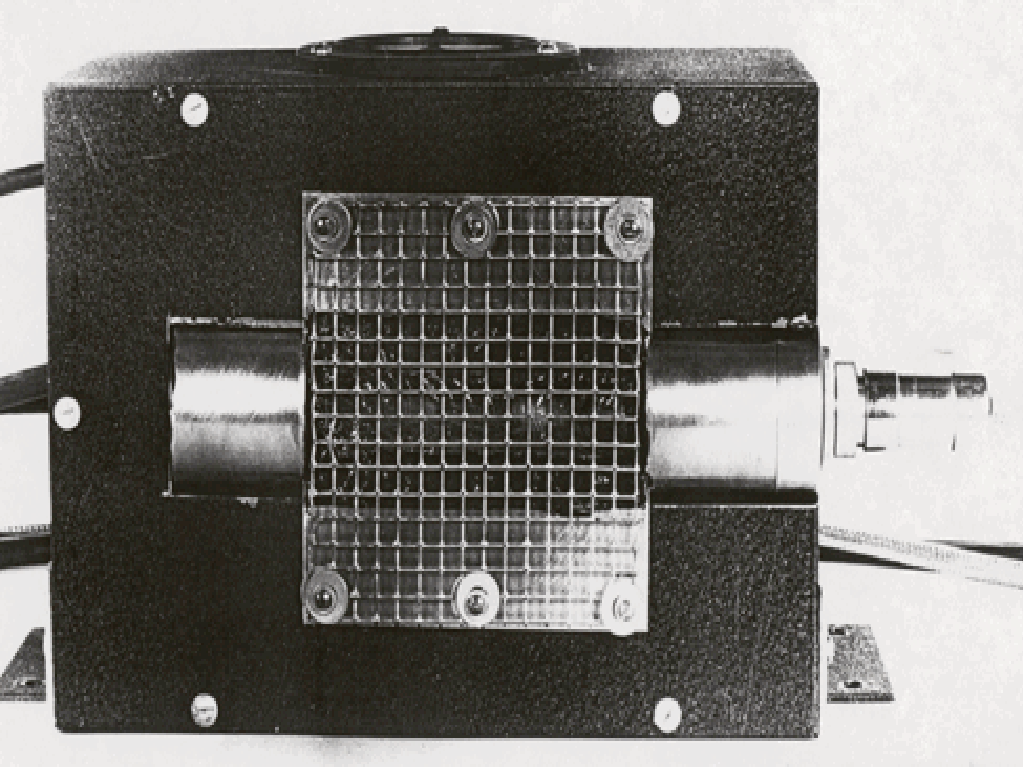
Watts Contamination Alpha Meter showing Detector Probe and Protective Screen 1944
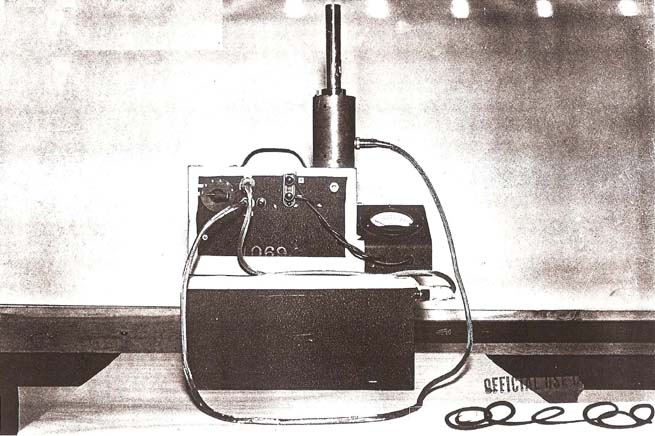
Watts Contamination Meter 1945
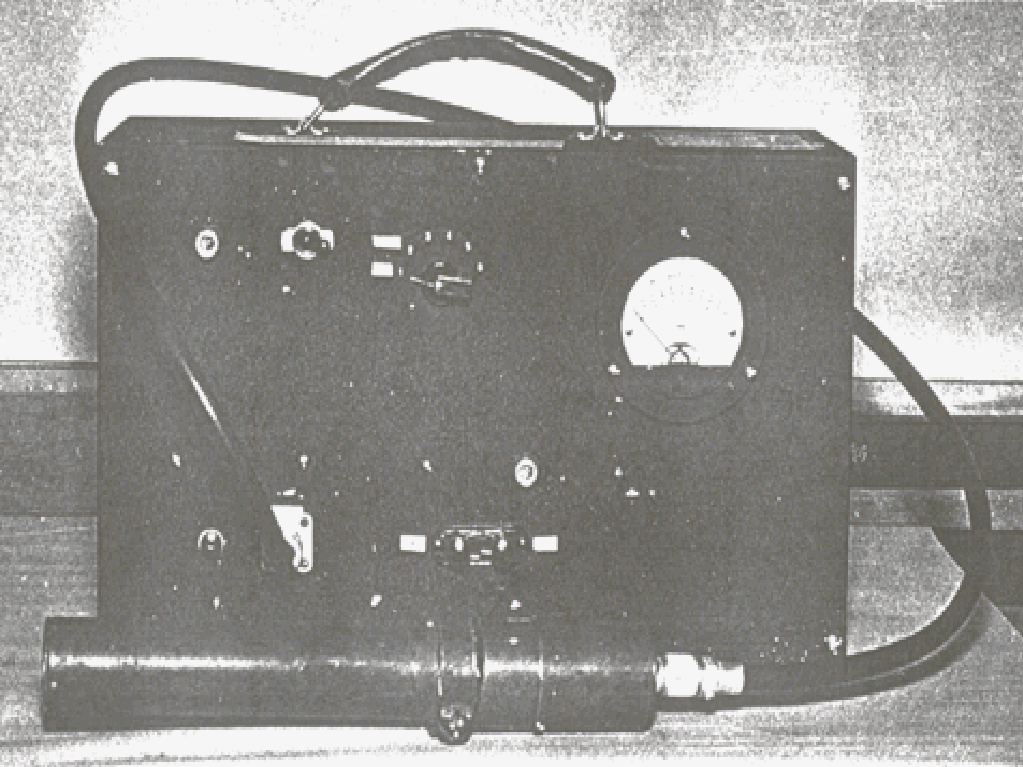
Watts Meter Type ? 1945
In 1947, the general trend in instrumentation was greater intensities. Examples where greater intensities are required include the water boiler, criticality measurements at Omega, the Ra-La experiments, and the Trinity Shot. At this time, the safe dose was 0.1 R per 24 hours, although many people had to received higher dose to accomplish their work. A brief survey indicated that even the most daring would not expose themselves to over 10 R/h. The Victoreen Model 247 was designed to measure these levels.
In 1944, the “whiff” or dose meter was employed as well as the Pluto surface scanner at Los Alamos.
The Sweepy was used at Los Alamos in 1947.
Need photo
Los Alamos Sweepy 1947
Howard C. Eberline worked at the lab in the Health Instruments Group in 1947. He oversaw the development of the Alpha Monitoring non-portable Poppy for use in salvage operations. It operated on AC. It had ranges from 0-3000 cpm and a second unit with range from 0-30,000 cpm. The unit used three types of chambers – a 4”x6” chamber for large surfaces, a pencil type chamber and a bent pencil chamber for use on small articles. It was completed in March 1947.
He later formed the Eberline Instrument Division of Reynolds Electric and Engineering Company located at P.O. Box 279, Sante Fe, New Mexico in 1956.
In 1949, R. J. Watts developed the portable fast-neutron fission-chamber monitor. The unit has an aluminum chamber containing 25 aluminum plates, alternate ones insulated from each other. The chamber was designed by Dr. Simon Shlaer. The active material is plated on the aluminum plates.
A modified Cutie Pie (SIC-7) from LANL was evaluated in Operations Sandstone in 1948 as well as the Pee-Wee, a survey meter incorporating a proportional counter (SPC-1B).
J. H. Larkins, of the the Los Alamos Scientific Laboratory, developed the Pee Wee in Dec 1947 as a portable proportional counter alpha survey meter. The unit was developed under the secrecy of the Manhattan Project. The Pee Wee was developed to replace the objectionable features of mechanical design of the Mark I, Model 41 instrument. It was 11.5” x 5-3/8” x 8” and weighed 15 lbs. It used two 1.5 V and one 67.5 V batteries. The unit came in a grey anodized aluminum case and bakelite bottom with doors on each end for easy servicing. It came with a canvass case to protect it from contamination and for ease in carrying. The probe pocket was attached to the main bag with snap fasteners so that it could be removed when the bag was laundered for decontamination. The scale was 2,000 and 20,000 cpm. It had a meter and headphones.
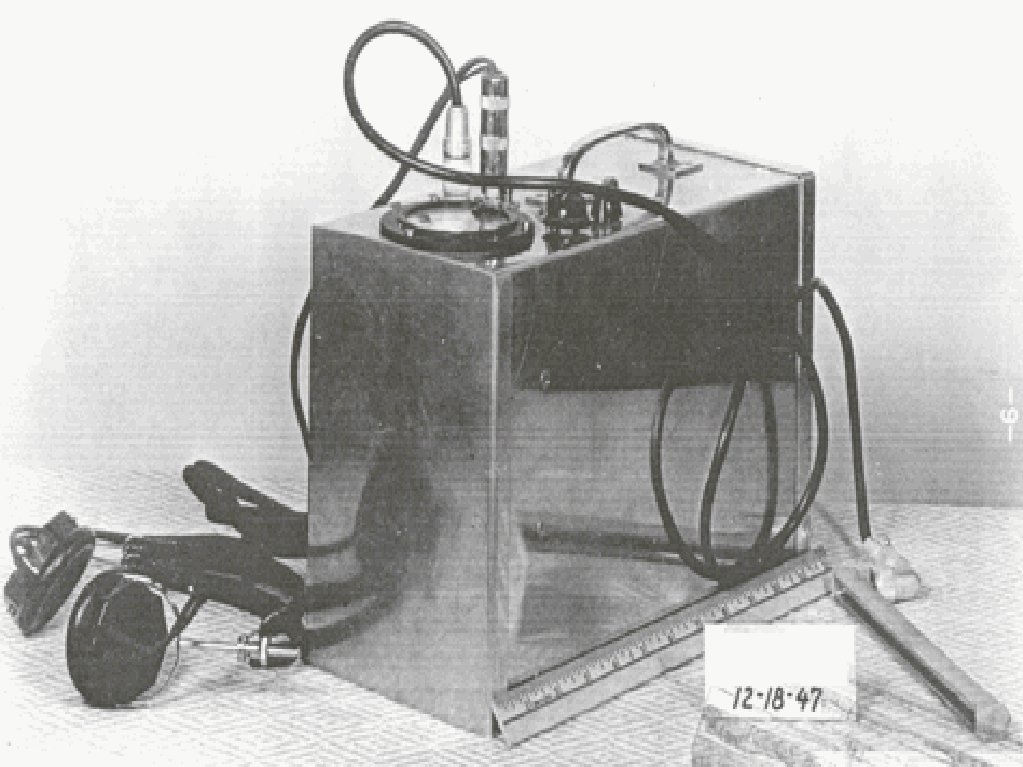
Los Alamos Pee Wee Mark I Model 41 1947
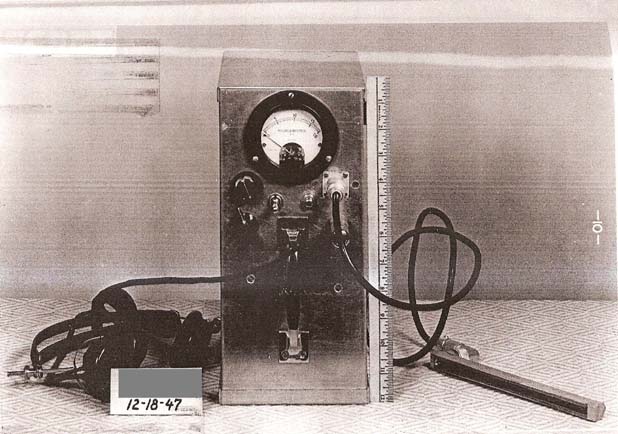
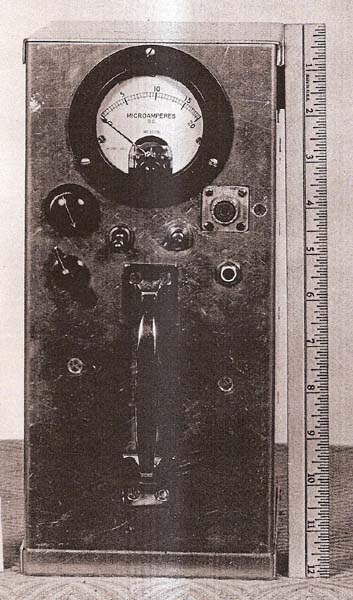
Los Alamos Pee Wee Mark I Model 41 1947
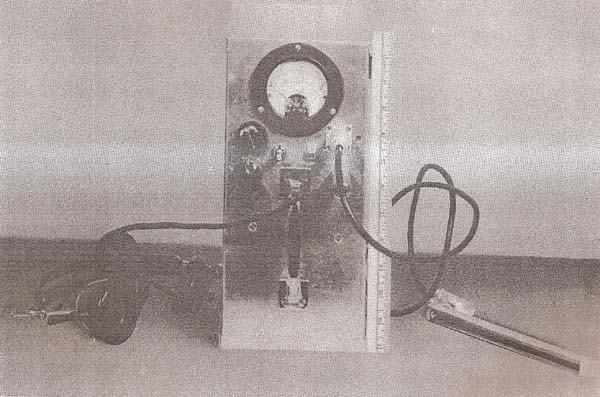
Los Alamos Pee Wee Mark I Model 41 1947
The Pee Wee could be used with three different types of alpha probes. There were two pencil type probes and one 4” x 6” pancake-type probe.
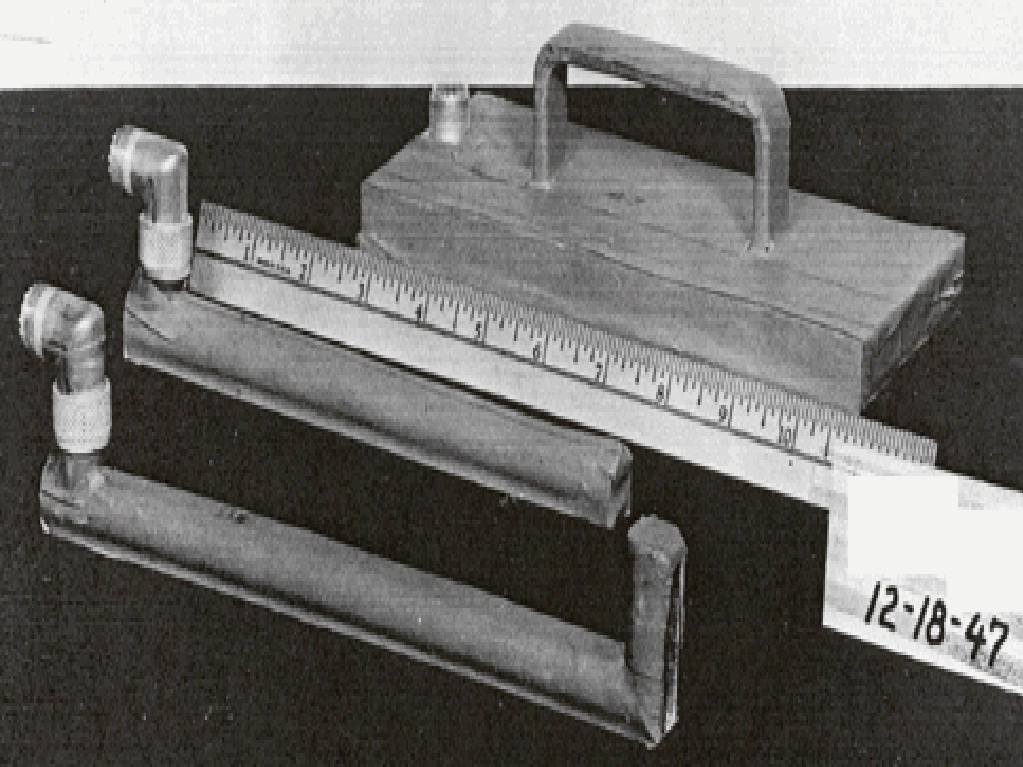
Los Alamos Pee Wee Alpha Probes 1947
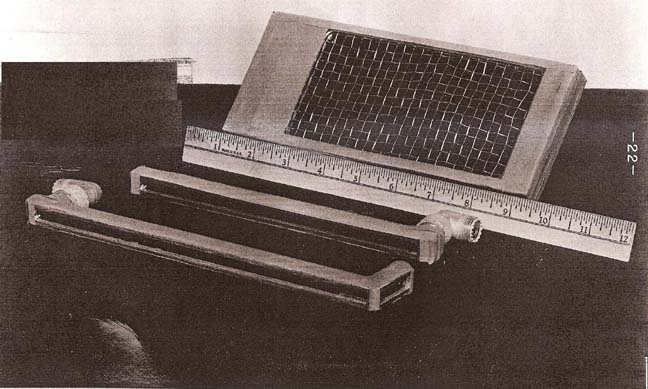
Los Alamos Pee Wee Alpha Probes 1947
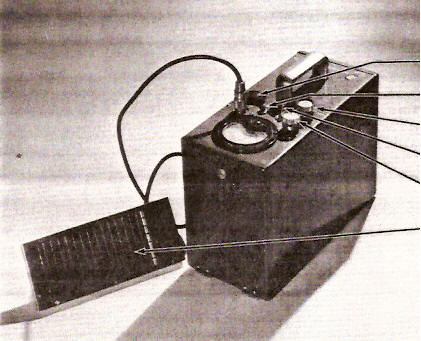
Los Alamos Pee Wee 1959
The Model 48-A PeeWee was an alpha air proportional counter produced commercially by the Nuclear Instrument and Chemical Corporation. The probe was 2” x 10” and had a mylar cover. The range scale was X100 and X1000 which provided a reading on the meter from 0-20 microamps.
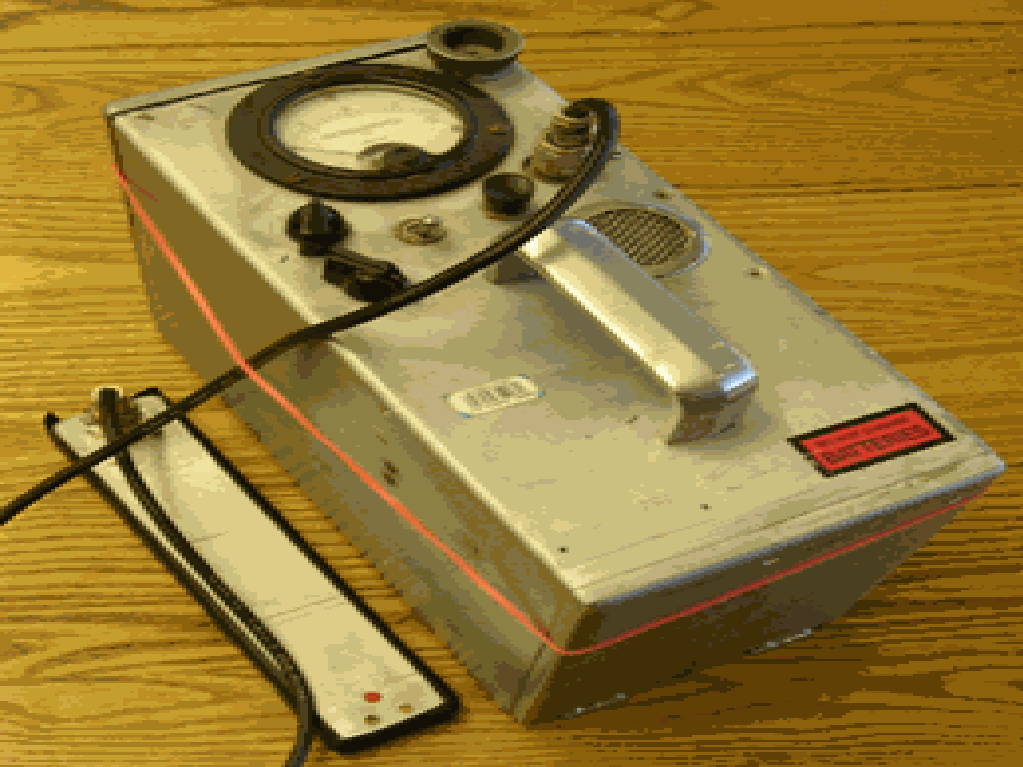
Nucl Inst and Chem Corp Model 48-A 195x
It was later manufactured in 1948 by the Nuclear Instrument and Chemical Corporation as the Model 2111.
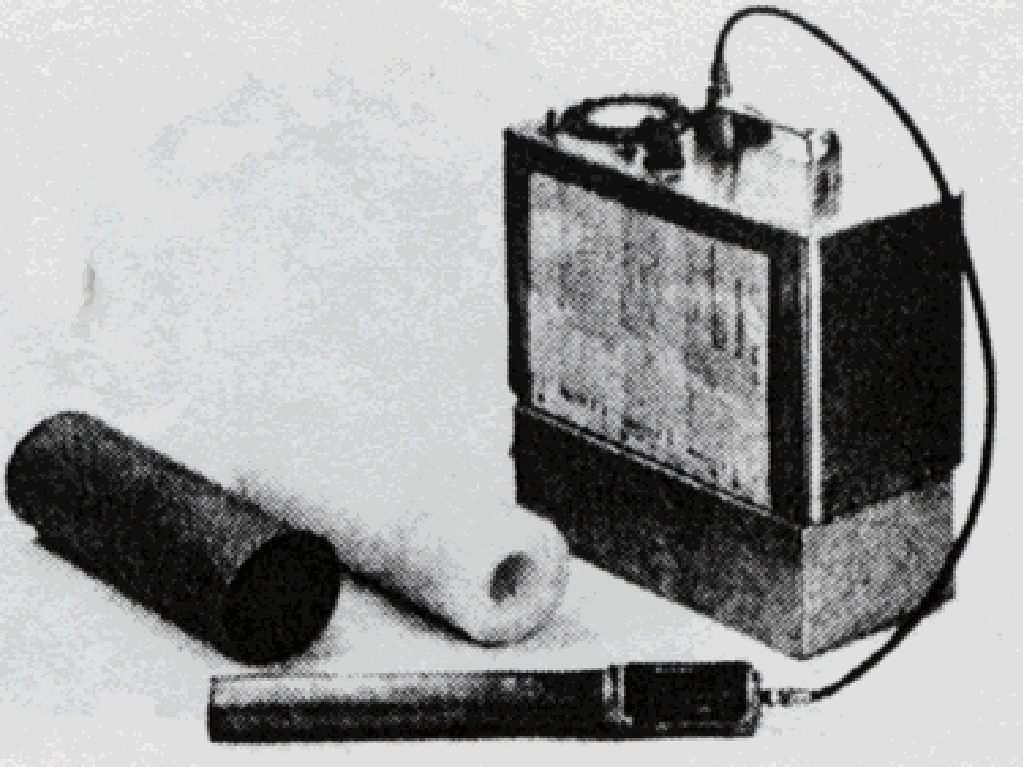
Los Alamos Converted Pee Wee 48-P 1958
A pocket radiation alarm was developed in 1947 by R.S Brown and H.G. Weiss. It was a pocket sized radiation monitor that provides an audible alarm when a predetermined quantity of radiation is detected. It is compact to be carried on a pocket or worn on a belt clip. It has a small ionization chamber and a buzzer. The unit was 3.5” x 2-3/16” x 1” and weighs 8 ounces. It is a refinement of a device developed at the Clinton Laboratories by P. R. Bell. The unit could respond to neutrons by using boron-10 plated on the inside walls of the outer electrodes.
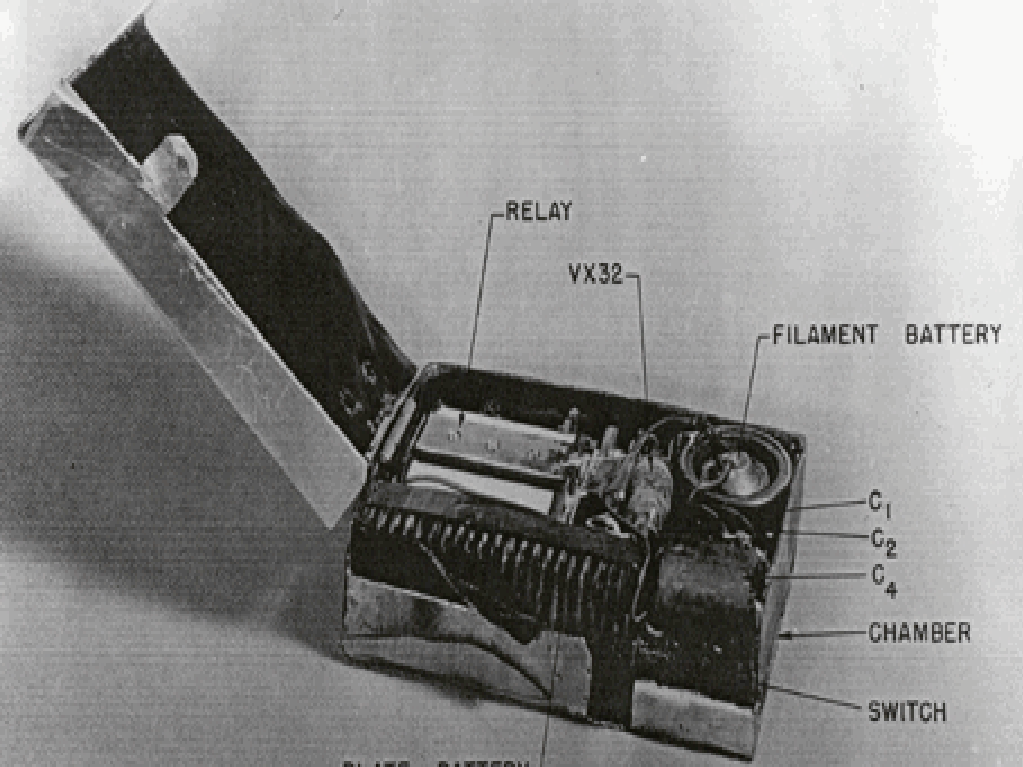
Pocket Radiation Alarm 1947
The Watts Fast Neutron survey meter was offered in 1946. The unit operates by the neutrons passing through several layers of plastic and recoil protons from these layers counted. The tube is filled with a counting gas and operated in the proportional region.
The LASL Model 100 ionization chamber was available in 1956. It had a ¼” Lucite beta ray shield. It measured from 0-500 mR/h and 0-100 . The unit weighed 8.5 lbs.
Los Alamos Model 100 1956
The Fast Neutron Fission Chamber was introduced in 1949 by Watts. The unit contains an aluminum chamber with 25 aluminum plates, alternated with an insulator. An active material was plated on the aluminum.
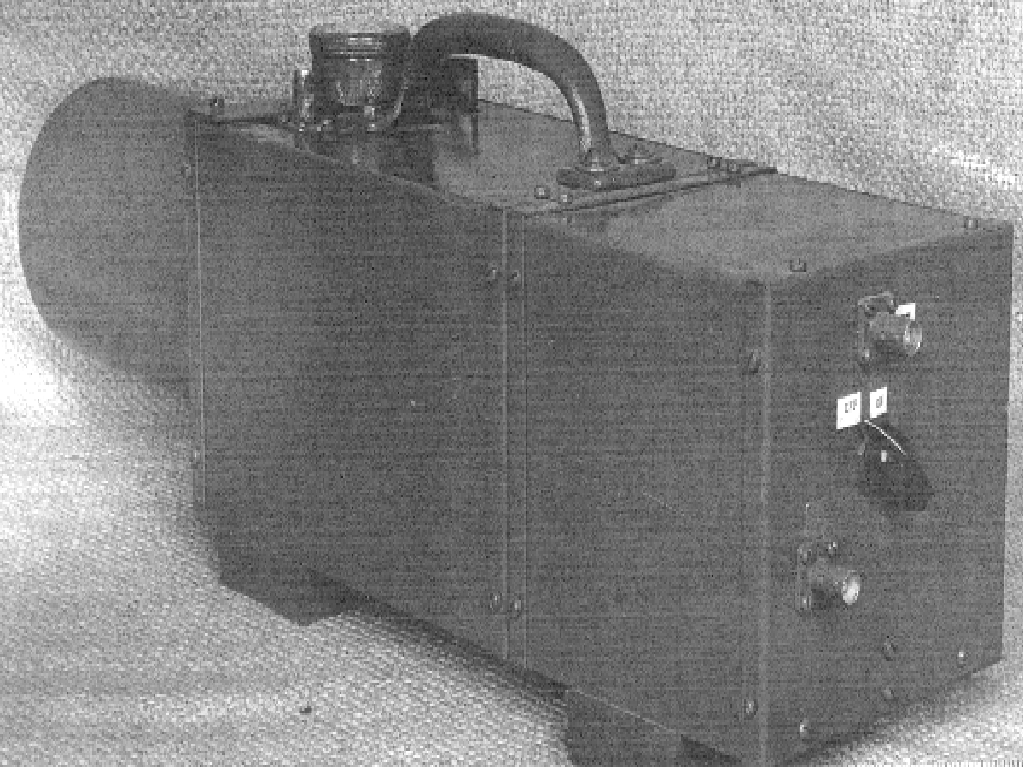
Watts Fast Neutron Fission Chamber 1949
The Personal Protection Gamma Radiation Meter was developed in 1949 by R. J. Watts. It was a simple instrument for measuring gammas from 0.05 to 100 R/h. It was designed to have the least possible number of components, ease of battery replacement and complete waterproofing using a lucite face.
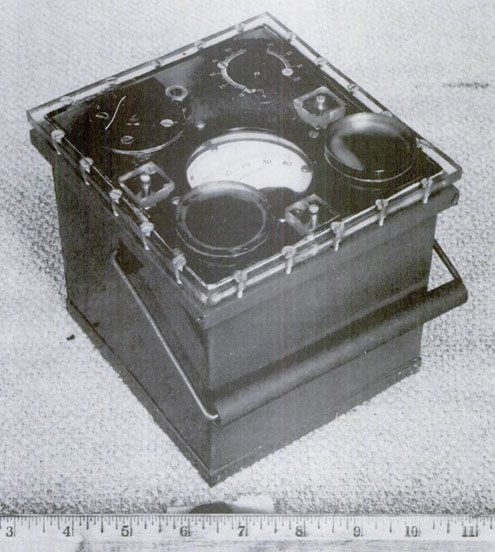
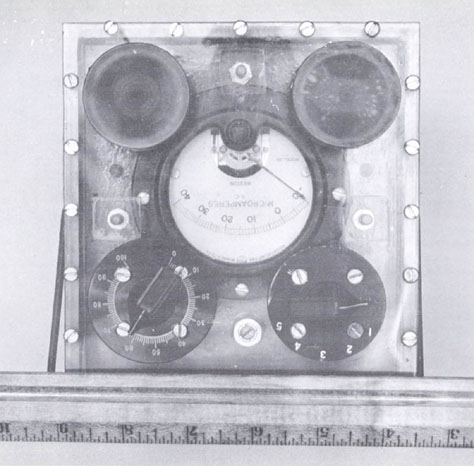
Personal Protection Gamma Radiation Meter by Watts 1949
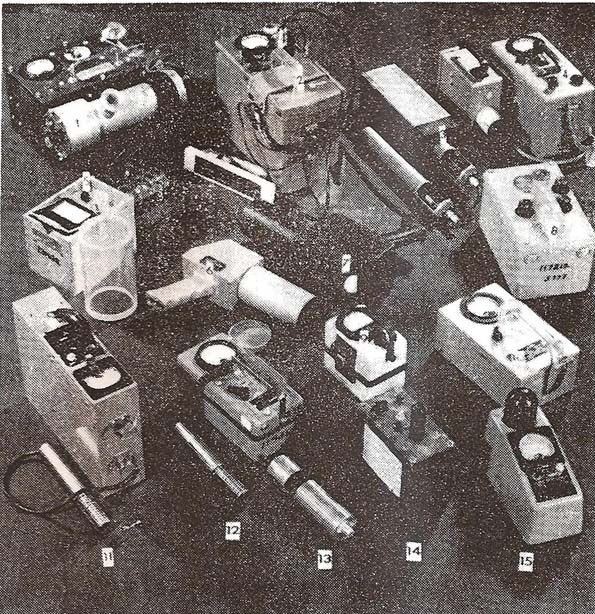
Collage of Detection Instruments from Los Alamos 1954